Cutting coolant serves as the lifeblood of modern metalworking operations, directly impacting tool longevity, surface quality, and production efficiency. From high-speed CNC machining to precision grinding, the right coolant formulation transforms heat management, friction reduction, and chip evacuation into competitive advantages. As manufacturing demands intensify and environmental regulations tighten in 2026, understanding cutting coolant fundamentals has become essential for engineers, plant managers, and lubricant formulators seeking to optimize their metalworking processes.
Understanding Cutting Coolant Functions and Performance
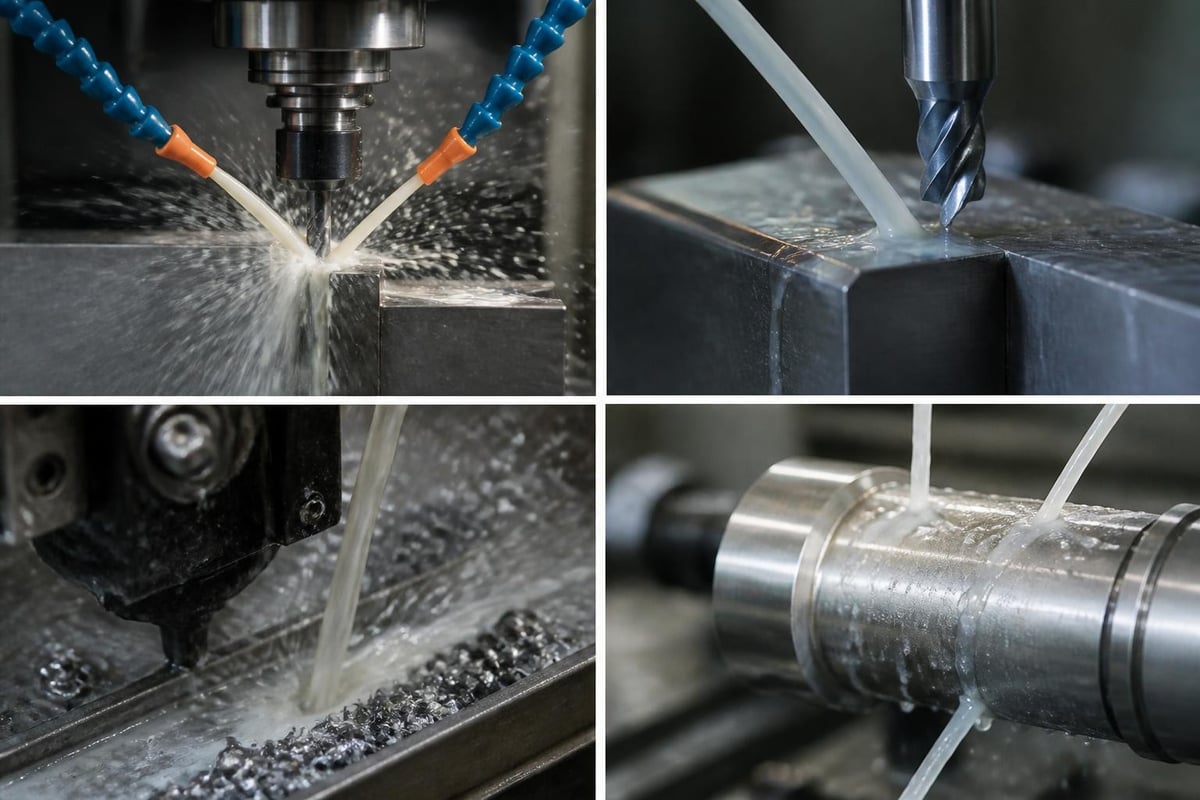
Cutting coolant delivers multiple simultaneous benefits during metal removal operations. Heat dissipation stands as the primary function, preventing thermal damage to both workpiece and cutting tool while maintaining dimensional accuracy. The fluid absorbs heat generated at the cutting zone and carries it away through circulation, stabilizing temperatures that would otherwise reach destructive levels.
Beyond thermal management, cutting coolant provides critical lubrication between tool and workpiece surfaces. This boundary layer reduces friction coefficients, lowering cutting forces and energy consumption while extending tool service intervals. The lubricating film also improves surface finish quality by preventing built-up edge formation and micro-welding phenomena common in ferrous metal machining.
Chip evacuation represents another vital function that many operations underestimate. Effective cutting coolant formulations wash away metal chips from the cutting zone, preventing re-cutting and surface scratches. This flushing action becomes especially critical in deep-hole drilling, internal threading, and cavity milling where chip accumulation can damage tools and parts.
Corrosion Protection During and After Machining
Modern cutting coolant must protect both in-process workpieces and finished components from oxidation and rust formation. Water-based formulations naturally invite corrosion risks, requiring robust inhibitor packages that create protective barriers on freshly machined metal surfaces. The Rust Preventive Additive Packages used in quality MetalWorking Fluids deliver this critical protection through carefully balanced chemistry.
For facilities machining cast iron, carbon steel, and alloy materials, the corrosion inhibitor package must function effectively in both the concentrated coolant sump and on parts awaiting next operations. Guangzhou Rolitom's formulations address this challenge through proprietary additive combinations that provide immediate wet corrosion protection plus several days of inter-process rust prevention without requiring additional protective coatings.
Coolant Function | Performance Impact | Measurement Method |
Heat Dissipation | Tool life extension 40-300% | Thermocouple monitoring |
Friction Reduction | Surface finish improvement Ra 0.8-3.2μm | Profilometer testing |
Chip Evacuation | Reduced tool breakage, scrap prevention | Visual inspection, cycle time |
Corrosion Protection | Zero rust claims, storage flexibility | Salt spray testing, humidity cabinet |
Types of Cutting Coolant Formulations
The metalworking industry recognizes four primary cutting coolant categories, each offering distinct performance characteristics suited to specific machining conditions. Straight oils contain no water, relying entirely on petroleum or synthetic base stocks enhanced with extreme-pressure additives, fatty acids, and pour-point depressants. These neat cutting oils excel in heavy-duty operations like broaching, gear hobbing, and deep-hole drilling where maximum lubricity matters more than cooling capacity.
Soluble oils represent the traditional workhorse category, containing 60-90% mineral oil emulsified in water at typical use dilutions of 3-10%. When mixed properly, these metalworking fluids create milky emulsions that balance cooling and lubrication effectively for general machining operations. Soluble oil formulations work particularly well on ferrous metals and provide good operator visibility during operations.
Semi-Synthetic and Fully Synthetic Systems
Semi-synthetic cutting coolants blend small amounts of mineral oil (5-30%) with synthetic lubricants, coupling agents, and corrosion inhibitors. This hybrid approach delivers improved cooling versus soluble oils while maintaining sufficient lubricity for moderate machining demands. Semi-synthetic formulations typically form translucent to semi-transparent working solutions that resist bacterial growth better than conventional soluble oils.
Fully synthetic cutting coolants contain zero petroleum oil, formulating instead with synthetic lubricants, polymers, and chemical additives dissolved in water. These clear working solutions provide maximum cooling capacity, excellent sump life, and superior cleanliness compared to oil-containing alternatives. Advanced metalworking fluid additive packages enable synthetic formulations to protect both ferrous and non-ferrous metals while meeting stringent environmental and worker safety requirements outlined in OSHA's metalworking fluids manual.
The selection between these categories depends on material hardness, cutting speed, tool type, and required surface finish. Aluminum machining typically favors synthetics or semi-synthetics to prevent staining and deliver superior chip washing. Titanium and high-nickel alloys demand straight oils or high-concentration soluble oils for their extreme lubricity requirements.
Selecting the Right Cutting Coolant for Your Application
Proper cutting coolant selection requires systematic evaluation of several interconnected factors. Material composition of the workpiece dictates fundamental coolant chemistry requirements. Ferrous metals tolerate most formulations but benefit from robust rust inhibitors, while non-ferrous materials like aluminum, brass, and copper demand specialized inhibitor packages preventing discoloration and chemical attack.
Machining operation intensity guides the cooling-versus-lubrication balance needed. High-speed milling and grinding generate significant heat with relatively light cutting forces, favoring synthetic or semi-synthetic coolants with excellent heat transfer properties. Conversely, low-speed operations like tapping, reaming, and broaching impose heavy cutting pressures with less heat generation, requiring oil-rich formulations or straight cutting oils.
Water hardness and quality significantly affect emulsion stability and coolant performance
Machine tool construction materials may restrict coolant chemistry options
Filtration and separation equipment capabilities influence acceptable particle and oil carryover levels
Environmental regulations impact disposal methods and formulation restrictions
Worker exposure concerns drive low-mist, low-odor, biocide-free product preferences
Compatibility Testing and Trial Protocols
Before committing to coolant changeover, manufacturing engineers should conduct structured compatibility trials. Begin with laboratory screening tests evaluating the candidate coolant's performance on representative workpiece materials and tool grades. Monitor surface finish, dimensional accuracy, tool wear rates, and visual appearance across typical production parameters.

Expand successful laboratory candidates into controlled production trials using dedicated machines or shifts. The University of Northern Iowa's cutting fluid management guide recommends minimum two-week trial periods capturing multiple coolant life cycles and varied production mixes. Document consumption rates, maintenance requirements, operator acceptance, and measurable performance improvements versus existing fluids.
Cutting Coolant Concentration and Mixing Best Practices
Achieving optimal cutting coolant performance begins with proper mixing and concentration control. Water quality establishes the foundation for stable, long-lasting emulsions and solutions. Excessive water hardness (above 200 ppm total hardness) can destabilize emulsions, cause additive dropout, and promote scale formation on machine surfaces and fluid distribution systems.
The correct mixing sequence prevents emulsion problems and ensures complete additive dispersion. Always add concentrated coolant to water, never water to concentrate. This fundamental rule allows emulsifiers and coupling agents to develop properly, creating stable particle size distributions that resist separation and maintain protective properties throughout the fluid's service life.
For water-based cutting coolants, maintaining target concentration ranges ensures balanced performance:
Measure concentrate accurately using graduated containers or automated dosing systems
Fill mixing tank with required water volume at ambient temperature (15-25°C optimal)
Add concentrate slowly while agitating to promote uniform mixing
Allow 30-60 minutes circulation before measuring final concentration
Verify concentration using refractometer and adjust if outside target range
Record batch data including water hardness, concentrate lot number, and initial readings
Concentration Monitoring and Maintenance
Daily concentration checks using refractometers provide essential data for maintaining cutting coolant performance. Most water-based coolants exhibit refractometer factors between 1.0 and 1.5, converting Brix readings to actual concentration percentages. Establishing your specific coolant's factor through laboratory titration ensures accurate field measurements.
Coolant Type | Typical Concentration Range | Refractometer Factor | Application Focus |
Soluble Oil | 5-10% | 1.0-1.2 | General machining, turning, milling |
Semi-Synthetic | 3-8% | 1.2-1.5 | Grinding, light machining, multi-metal |
Fully Synthetic | 2-6% | 1.5-2.0 | High-speed machining, precision grinding |
Concentration naturally decreases through evaporation (water loss) and increases through dragout (coolant carried away on parts and chips). Compensate for evaporation by adding diluted coolant at working concentration rather than straight water, preventing harmful concentration creep that wastes product and may damage machine components.
Maintaining Cutting Coolant Quality and Extending Sump Life
Proactive maintenance programs transform cutting coolant from consumable expense into strategic asset. Tramp oil removal ranks as the single most important maintenance practice for water-based coolants. Hydraulic oil, slideway lubricant, and metal fines carried into the coolant sump feed bacterial growth, reduce cooling efficiency, and accelerate fluid degradation.
Implement continuous or frequent tramp oil skimming using belt skimmers, disk separators, or coalescers appropriate for your sump volume and contamination rates. Target tramp oil levels below 2% to prevent the anaerobic bacterial growth that produces characteristic "Monday morning odor" and consumes valuable corrosion inhibitors and biocides.
pH monitoring provides early warning of bacterial contamination, coolant depletion, or concentrate quality issues. Most cutting coolants function optimally between pH 8.5 and 9.5, with values below 8.0 signaling bacterial activity or additive depletion requiring immediate attention. Test pH daily using calibrated meters or indicator papers, documenting trends that reveal developing problems before they impact production.
Filtration and Contamination Control
Effective filtration systems extend cutting coolant life while improving machining performance and part quality. Metal fines below 10 microns remain suspended in fluid, acting as lapping compounds that accelerate tool wear and degrade surface finish. Multi-stage filtration combining settling tanks, centrifugal separators, and cartridge filters captures these destructive contaminants.
For facilities formulating custom coolants or maintaining large central systems, Guangzhou Rolitom's Metalworking Fluid Additive Packages offer concentrated performance boosters that restore depleted corrosion inhibitors, EP/AW additives, and biocides without requiring complete fluid replacement. These additive packages provide cost-effective sump life extension when coolant base stability remains acceptable but performance characteristics have diminished.
Weekly maintenance routine for cutting coolant systems: tramp oil skimming, concentration verification, pH testing, filtration system cleaning, bacterial count sampling, and performance additive supplementation
Regular bacterial testing using dip slides or laboratory cultures quantifies microbial populations before they compromise fluid quality. Target bacterial counts below 10³ colony-forming units per milliliter (CFU/mL) for general-purpose coolants, with tighter controls (10² CFU/mL) for precision grinding and aerospace applications demanding extended rust protection and cleanliness.
Environmental Compliance and Waste Management
Modern cutting coolant programs must address increasingly stringent environmental regulations governing wastewater discharge, worker exposure, and waste disposal. The EPA's Metal Products and Machinery Effluent Guidelines establish federal baseline requirements for facilities discharging metalworking fluid waste streams, with many states and municipalities imposing additional restrictions on pH, oil content, heavy metals, and total dissolved solids.
Waste minimization through extended fluid life represents the most cost-effective environmental strategy. Implementing comprehensive maintenance programs, investing in high-quality Lubricant Additive Packages, and training operators on proper coolant handling can double or triple service intervals compared to neglected systems. This longevity reduces fresh coolant purchases, disposal volumes, and associated regulatory compliance burdens.
When cutting coolant reaches end-of-life, proper disposal or recycling becomes mandatory. Options include:
Vacuum evaporation reducing fluid volume 90-95% while recovering water for reuse
Ultrafiltration separating oil, water, and solids for individual waste stream management
Chemical treatment breaking emulsions and precipitating metals for conventional disposal
Licensed waste hauler services for facilities lacking on-site treatment capabilities
Worker Health and Safety Considerations
Prolonged skin contact with cutting coolants can cause dermatitis, while fluid mists may trigger respiratory irritation in sensitive individuals. Comprehensive fluid management programs following OSHA's safety and health best practices protect workers through engineering controls, administrative procedures, and personal protective equipment.
Select cutting coolant formulations minimizing known sensitizers including formaldehyde-release biocides, chlorinated additives, and certain amine compounds. Modern synthetic and semi-synthetic products from experienced manufacturers like Guangzhou Rolitom incorporate safer alternative chemistries delivering comparable performance without problematic ingredients that trigger health complaints or regulatory scrutiny.
Advanced Cutting Coolant Technologies and Future Trends
The metalworking industry continues advancing cutting coolant technology through innovative formulation approaches and novel additive systems. Nanoparticle-enhanced coolants represent one promising frontier, with research into nanoparticle-enhanced coolant mechanisms demonstrating significant improvements in thermal conductivity, lubrication performance, and tool life extension when properly formulated and dispersed.
Minimum quantity lubrication (MQL) systems apply micro-droplets of cutting fluid directly to the tool-workpiece interface, reducing fluid consumption by 90-99% compared to flood coolant delivery. While MQL works exceptionally well for certain materials and operations, it requires specialized tooling, precise delivery systems, and typically performs best with straight cutting oils rather than water-based emulsions.
Biological and renewable content cutting coolants address sustainability demands without compromising performance. Vegetable-based esters, renewable synthetic lubricants, and bio-derived corrosion inhibitors now match or exceed petroleum-derived ingredients in many applications. These environmentally preferred formulations offer superior biodegradability, reduced aquatic toxicity, and lower carbon footprints appealing to manufacturers pursuing green certification and corporate sustainability goals.
Smart Coolant Monitoring and Industry 4.0 Integration
Connected sensor networks now enable real-time cutting coolant monitoring integrated with manufacturing execution systems and predictive maintenance platforms. In-line sensors continuously track concentration, pH, temperature, contamination levels, and bacterial activity, triggering automated dosing systems or maintenance alerts before problems affect production quality.
This data-driven approach transforms cutting coolant management from reactive troubleshooting to proactive optimization. Machine learning algorithms identify consumption patterns, predict maintenance intervals, and recommend formulation adjustments based on production mix changes. Forward-thinking lubricant technology companies develop industrial lubricant products specifically designed for these intelligent fluid management systems, incorporating sensor-friendly chemistries and digital integration capabilities.
Troubleshooting Common Cutting Coolant Problems
Even well-maintained systems occasionally experience cutting coolant issues requiring systematic diagnosis and correction. Emulsion instability manifesting as oil separation, stratification, or color changes typically stems from contamination, concentration extremes, or base fluid degradation. Verify concentration accuracy, check for tramp oil contamination exceeding 5%, and evaluate whether coolant age or bacterial loading has compromised emulsifier performance.
Excessive foaming frustrates operators and reduces cooling efficiency by trapping air bubbles that insulate rather than conduct heat. Foam problems arise from multiple causes:
Concentration too high relative to operation requirements
Water hardness creating calcium or magnesium soap formation
Tramp oil emulsifying into fine droplets stabilizing foam
High-pressure coolant delivery creating turbulent mixing
Contamination with parts-washing detergents or hydraulic fluids
Address foam systematically by confirming correct concentration, reducing delivery pressure, eliminating contamination sources, and adding controlled amounts of compatible defoamer if mechanical corrections prove insufficient. Avoid over-treating with defoamer, as excess antifoam agents can reduce wetting ability and corrosion protection.
Odor, Discoloration, and Biological Growth
Unpleasant odors indicate anaerobic bacterial metabolism producing hydrogen sulfide, mercaptans, and other sulfur compounds. This "rotten egg" smell signals urgent need for intervention before bacteria completely destroy coolant performance. Immediate actions include aggressive tramp oil removal, pH adjustment to 9.0-9.5, biocide addition per manufacturer recommendations, and potential partial fluid replacement if contamination is severe.
Metal discoloration problems require material-specific solutions. Aluminum staining typically results from high pH (above 9.5), excessive alkalinity, or incompatible corrosion inhibitors. Copper and brass discoloration often traces to sulfur-based EP additives or bacterial contamination. Yellow or brass parts turning pink indicate overly aggressive aluminum inhibitor packages attacking copper alloys.
Problem | Common Causes | Diagnostic Tests | Corrective Actions |
Emulsion Separation | Tramp oil, water hardness, age | Visual inspection, titration | Skim oil, adjust concentration, replace fluid |
Foam | High concentration, contamination | Concentration, water hardness | Dilute, remove contamination, add defoamer |
Odor | Anaerobic bacteria, low pH | pH, bacterial count | Raise pH, add biocide, improve aeration |
Rust | Low concentration, depleted inhibitors | Concentration, strip test | Increase concentration, supplement inhibitors |
Dermatitis | Bacteria, contamination, pH extremes | Bacterial count, pH | Control bacteria, balance pH, improve hygiene |
Optimizing Cutting Coolant Economics
Strategic cutting coolant management significantly impacts manufacturing cost structures beyond simple fluid purchase prices. Total cost of ownership encompasses concentrate pricing, mixing labor, disposal expenses, machine downtime, tool consumption, rejected parts, and worker health incidents. Optimizing this complete cost picture often justifies premium coolant formulations delivering extended service life and superior performance.
Calculate your facility's true coolant costs per machined part using comprehensive metrics. Track concentrate consumption, disposal volumes, tool replacement frequency, scrap rates, and maintenance labor hours attributable to fluid management. This data-driven approach reveals where performance improvements generate measurable returns, supporting investment in better formulations, advanced filtration systems, or automated monitoring equipment.
Coolant consolidation reduces inventory complexity, simplifies operator training, and improves purchasing leverage with suppliers. Many facilities successfully operate with just 2-3 carefully selected formulations covering 80-90% of applications: a general-purpose semi-synthetic for routine ferrous machining, a specialized aluminum-safe synthetic for non-ferrous operations, and perhaps a heavy-duty soluble oil for challenging materials or operations. This streamlined approach versus maintaining 10-15 different products delivers administrative efficiency without compromising technical performance.
Building Effective Supplier Partnerships
Partnering with experienced lubricant technology providers brings formulation expertise, technical support, and continuous improvement capabilities to your metalworking operations. Quality suppliers offer laboratory services for coolant testing, troubleshooting assistance for performance issues, and customized formulation development for unique applications or challenging materials.
When evaluating cutting coolant suppliers, assess technical depth beyond product catalogs. Can they provide detailed safety data, performance validation, and application engineering support? Do they offer training programs for your maintenance personnel and machine operators? Will they collaborate on waste reduction initiatives and environmental compliance? These value-added services often differentiate premium partners from commodity chemical vendors.
Effective cutting coolant management requires balancing thermal performance, lubrication properties, corrosion protection, and economic sustainability across diverse metalworking applications. From fundamental formulation chemistry to advanced monitoring technologies, success depends on selecting appropriate products, maintaining optimal conditions, and implementing proactive management systems. Guangzhou Rolitom Lubricant Technology CO.,LTD leverages over 20 years of industrial lubrication experience to help manufacturers optimize their metalworking fluid programs through high-performance additive packages, customized formulations, and comprehensive technical support-contact their team to discuss how their expertise can enhance your machining operations.
Contact: LilyLu
Phone: +86 138 2603 0637
E-mail: lilylu@rolitom.com
Whatsapp:+8613826030637
Add: Room 426, No.1218 Zhongshan Avenue Middle, Tianhe District, Guangzhou City,China
We chat