Machining coolant plays a fundamental role in modern metalworking operations, serving as the critical interface between cutting tools and workpieces during turning, milling, grinding, and drilling processes. As manufacturing demands push toward tighter tolerances, higher production speeds, and extended tool life, the selection and management of machining coolant has evolved from a simple operational decision to a strategic performance factor. Understanding the chemistry, application methods, and maintenance requirements of these fluids directly impacts both production efficiency and workplace safety across automotive, aerospace, and general machining environments.
Understanding Machining Coolant Functions and Chemistry
Machining coolant delivers multiple concurrent functions during metal cutting operations. The primary role centers on thermal management, dissipating heat generated at the tool-workpiece interface where temperatures can exceed 500°C in steel machining. This cooling action prevents thermal expansion of workpieces, maintains dimensional accuracy, and protects cutting edges from heat-related degradation.
Beyond temperature control, these fluids provide essential lubrication that reduces friction between the cutting tool and chip formation zone. This lubrication minimizes built-up edge formation, decreases cutting forces, and enables higher feed rates without compromising surface finish quality.
The chemistry of machining coolant typically incorporates several key components:
Base fluids: mineral oils, synthetic esters, or water
Emulsifiers: surfactants that stabilize oil-water mixtures
Corrosion inhibitors: compounds protecting ferrous and non-ferrous metals
Extreme pressure additives: sulfur, phosphorus, or chlorine compounds for heavy cutting
Biocides: antimicrobial agents preventing bacterial contamination
Antifoam agents: silicone or non-silicone defoamers
Modern formulations increasingly emphasize environmental compatibility and worker safety. The MetalWorking Fluids provides comprehensive guidance on managing exposure risks and implementing proper ventilation systems in facilities using these products.
 Classification of Machining Coolant Types
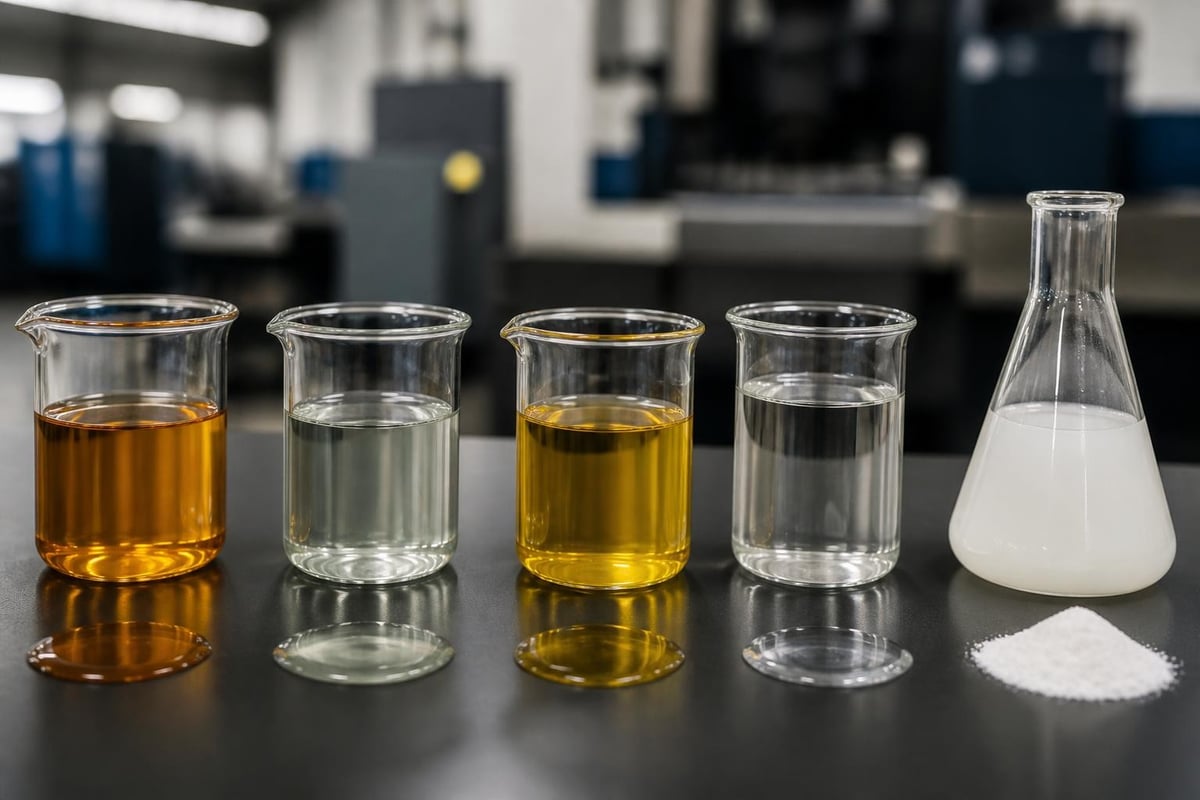
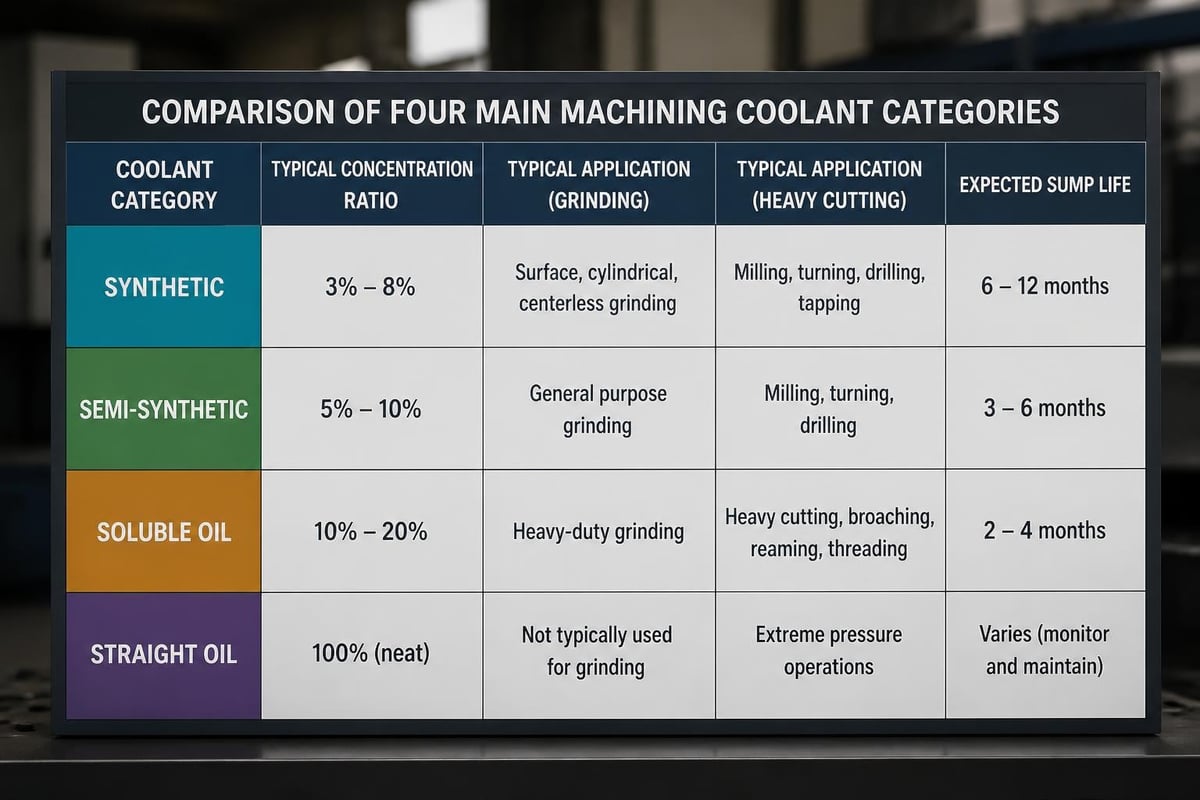
The metalworking industry categorizes machining coolant into four primary classifications, each offering distinct performance characteristics and application suitability.
Straight Oils
Straight oils contain no water and consist primarily of mineral or synthetic base stocks blended with performance additives. These neat cutting oils excel in heavy-duty operations requiring maximum lubricity, such as broaching, gear cutting, and deep-hole drilling. Their advantages include superior rust protection, extended sump life, and minimal bacterial growth concerns.
However, straight oils offer limited cooling capacity compared to water-based alternatives and generate higher mist levels during high-speed machining. Cost per gallon typically runs higher than water-soluble products, though their undiluted application can offset this through extended replacement intervals.
Soluble Oils
Soluble oils, also called emulsifiable oils, form milky emulsions when mixed with water at concentrations typically ranging from 3% to 10%. These products combine the lubricity of mineral oils with the cooling capacity of water, making them versatile for general machining operations across ferrous and non-ferrous metals.
The emulsion stability depends heavily on water quality and mixing procedures. Hard water with high calcium and magnesium content can destabilize emulsions, leading to oil separation and reduced performance. Manufacturers across metalworking fluid portfolios now engineer formulations with enhanced hard water tolerance to address this challenge.
Semi-Synthetic Fluids
Semi-synthetic machining coolant blends small amounts of mineral oil (typically 5% to 30%) with water-soluble synthetic additives and corrosion inhibitors. These products deliver translucent to semi-transparent solutions that combine excellent cooling, good lubrication, and superior sump cleanliness compared to traditional soluble oils.
Feature | Soluble Oils | Semi-Synthetics | Full Synthetics |
Oil Content | 60-90% | 5-30% | 0% |
Appearance | Milky white | Translucent | Clear/colored |
Cooling | Good | Excellent | Excellent |
Lubricity | Excellent | Good | Fair to Good |
Sump Life | Moderate | Long | Very Long |
Cost per Gallon | Low | Moderate | High |
The balanced performance profile makes semi-synthetic fluids popular in job shops handling diverse materials and operations. Their reduced oil content typically extends sump life and simplifies waste disposal compared to conventional emulsions.
Fully Synthetic Fluids
Fully synthetic machining coolant contains no mineral oil, relying entirely on water-soluble synthetic compounds, polymers, and corrosion inhibitors. These solutions remain completely transparent, allowing excellent visibility of the work area and simplifying tramp oil detection.
Synthetic fluids deliver maximum cooling capacity, superior corrosion protection through engineered inhibitor packages, and exceptional resistance to bacterial contamination. Their extended sump life often exceeds soluble oils by 200% to 300%, substantially reducing disposal costs and production downtime for fluid changes.
The primary limitation centers on lubricity, which remains lower than oil-based alternatives. This makes synthetics better suited for grinding, high-speed machining of aluminum and non-ferrous metals, and operations where cooling takes priority over extreme pressure lubrication.
 Selection Criteria for Optimal Machining Coolant Performance
Selecting appropriate machining coolant requires systematic evaluation of multiple technical and operational factors. The material being machined constitutes the first decision point, as different alloys present unique chemical reactivity and lubrication requirements.
Ferrous metals such as carbon steel, alloy steel, and cast iron generally perform well with soluble oils or semi-synthetic fluids offering robust extreme pressure protection. Stainless steel machining demands specialized formulations with enhanced chlorine-free EP additives and superior corrosion inhibition to prevent staining.
Non-ferrous metals including aluminum, copper, and brass require careful coolant chemistry to avoid corrosive reactions. Aluminum particularly benefits from low-pH synthetic or semi-synthetic fluids containing amine-based corrosion inhibitors rather than traditional phenolic compounds that can stain aluminum surfaces.
The machining operation type significantly influences coolant selection:
Grinding operations generate high heat with minimal chip formation, prioritizing cooling over lubrication - synthetics excel here
Turning and milling require balanced cooling and lubrication - semi-synthetics or soluble oils perform best
Deep hole drilling demands maximum lubricity with good chip flushing - straight oils or concentrated emulsions work well
Broaching and tapping involve extreme pressure conditions - EP-fortified straight oils deliver optimal results
Production volume and batch size economics also factor into coolant decisions. High-volume operations justify investment in premium synthetic fluids with extended sump life, while job shops with frequent product changeovers may prefer cost-effective soluble oils despite shorter replacement intervals.
Water quality assessment remains essential before implementing water-soluble coolants. Testing should measure total hardness, chloride content, sulfate levels, and pH. Water exceeding 200 ppm hardness typically requires treatment or selection of coolants engineered for hard water tolerance. For operations seeking simplified formulation and reliable performance, concentrated additives like the Semi-Finished Compound Lubricant FS101 enable shops to create custom metalworking fluids by simply diluting with tap water, eliminating complex mixing procedures while maintaining stable performance across varying water conditions.
Application Methods and Delivery Systems
Effective machining coolant application ensures fluid reaches the cutting zone at appropriate volume and pressure. Traditional flood coolant systems remain the most common delivery method, pumping large volumes of coolant (typically 10 to 100 liters per minute) over the tool and workpiece. This approach provides maximum cooling and excellent chip evacuation but consumes significant fluid volumes and generates substantial mist.
High-pressure coolant systems, operating at 500 to 1,500 psi, direct concentrated fluid streams precisely at the cutting edge through specialized toolholders or through-spindle delivery. This targeted application improves chip breaking in deep-hole drilling, reduces cycle times in turning operations, and enables higher cutting speeds without thermal damage. The pressurized delivery also helps flush chips from blind holes and complex cavities.
Minimum Quantity Lubrication (MQL) represents an emerging application philosophy that delivers micro-quantities of neat oil or specialized MQL fluids (typically 10 to 100 ml per hour) as an aerosol mist directly to the cutting zone. Research documented in recent MQL studies demonstrates substantial reductions in fluid consumption and disposal costs while maintaining acceptable tool life in many applications.
MQL systems particularly suit aluminum machining, drilling operations, and manufacturing environments prioritizing sustainability. However, these systems provide limited cooling capacity compared to flood coolant and require careful tool path programming to prevent thermal buildup during extended roughing cuts.
The choice between application methods depends on operation type, material properties, and environmental priorities. Many modern machining centers incorporate multiple delivery options, allowing operators to switch between flood cooling for heavy roughing and MQL for precision finishing passes.
Maintenance and Monitoring Best Practices
Systematic machining coolant maintenance directly impacts fluid performance, tool life, and worker health. Concentration control stands as the most fundamental maintenance parameter, as dilution from water additions or concentration from evaporation alters the balance of cooling, lubrication, and corrosion protection.
Refractometer testing should occur daily at consistent temperatures, comparing readings against the manufacturer's refractometer factor. Most water-soluble coolants operate optimally between 5% and 10% concentration, though specific applications may require adjustments. Under-concentration leads to inadequate corrosion protection and bacterial growth, while over-concentration wastes product and may cause dermatological issues.
pH monitoring provides early warning of coolant degradation and contamination. Fresh machining coolant typically registers pH values between 8.5 and 9.5, with the alkaline environment inhibiting corrosion and controlling bacterial populations. pH drops below 8.0 indicate bacterial contamination, depletion of corrosion inhibitors, or contamination with acidic tramp oils. Immediate corrective action prevents accelerated sump degradation.
Bacterial and fungal contamination represents the primary cause of premature coolant failure. Anaerobic bacteria proliferate in oxygen-depleted sump corners and beneath chip mats, producing sulfur compounds responsible for characteristic "Monday morning odor." Regular sump cleaning, adequate fluid circulation, and proper biocide treatment control microbial populations without harming beneficial emulsion stability.
Critical Monitoring Parameters
Parameter | Frequency | Target Range | Action Level |
Concentration | Daily | 5-10% | ±0.5% from target |
pH | Weekly | 8.5-9.5 | <8.0 or >10.0 |
Bacteria Count | Monthly | <10³ CFU/ml | >10⁵ CFU/ml |
Tramp Oil | Weekly | <5% volume | >10% volume |
Tramp oil contamination from machine way lubrication and hydraulic leaks degrades machining coolant performance by depleting emulsifiers, creating bacterial breeding grounds, and reducing heat transfer capacity. Installation of belt skimmers, disk skimmers, or coalescers removes floating tramp oil before it emulsifies into the coolant body.
Temperature control affects both coolant performance and sump life. Operating temperatures above 35°C accelerate bacterial growth, increase evaporation rates, and reduce corrosion inhibitor effectiveness. Heat exchangers or central coolant systems maintain optimal temperature ranges while providing filtration and consolidation benefits across multiple machines.
Health, Safety, and Environmental Considerations
Worker exposure to machining coolant mist and aerosols presents documented respiratory and dermatological risks that require proactive management strategies. The OSHA manual on metalworking fluids establishes comprehensive best practices for exposure control, emphasizing hierarchy of controls from elimination through engineering controls before relying on personal protective equipment.
Engineering controls should include enclosure of machining operations, installation of local exhaust ventilation at mist generation points, and mist collection systems on high-speed equipment. Proper machine tool design with effective splash guards and enclosed work zones significantly reduces airborne exposure while protecting coolant from external contamination.
Administrative controls encompass worker training on proper coolant handling, skin protection protocols, and early reporting of irritation symptoms. Implementing regular health surveillance programs helps identify adverse reactions before they progress to chronic conditions. Rotation of workers between wet and dry operations can reduce cumulative exposure in high-risk environments.
Skin contact with machining coolant causes the majority of health complaints in metalworking facilities. Preventive measures include providing barrier creams, ensuring availability of washing facilities, and requiring immediate cleaning of coolant splashes on skin or clothing. Proper glove selection matters, as some materials degrade rapidly when exposed to specific coolant chemistries.
Environmental regulations increasingly impact coolant selection and disposal practices. Modern formulations eliminate or minimize problematic components including:
Nitrites and nitrosamines (carcinogenic precursors)
Heavy metals such as lead and barium
Chlorinated paraffins (bioaccumulative)
Formaldehyde-releasing biocides
Waste coolant disposal requires treatment to separate oils, adjust pH, and reduce chemical oxygen demand before discharge to municipal systems or approved disposal facilities. Companies exploring additive packages for formulation should prioritize chemistries that simplify waste treatment while maintaining performance standards.
Advanced Coolant Technologies and Future Trends
The metalworking industry continues developing innovative machining coolant technologies addressing performance, sustainability, and health concerns simultaneously. Vegetable oil-based coolants derived from canola, soy, and sunflower oils offer biodegradability and lower toxicity profiles compared to conventional mineral oil products. These bio-based fluids demonstrate particular promise in aluminum machining and operations where environmental impact minimization takes priority.
Nano-fluid technology incorporates nanoparticles of materials such as aluminum oxide, copper oxide, or graphene into conventional coolant bases to enhance thermal conductivity and lubrication properties. University research including work at Curtin University documents improved heat transfer coefficients and reduced tool wear when nanoparticles are properly dispersed and stabilized in metalworking fluids. Commercial adoption remains limited by cost considerations and concerns about nanoparticle occupational exposure.
Dry machining and near-dry machining continue expanding into applications previously requiring flood coolant. Advanced coated cutting tools with enhanced heat resistance, combined with cryogenic cooling using liquid nitrogen or carbon dioxide, enable select operations to eliminate conventional coolant entirely. These approaches suit operations where coolant contamination of workpieces creates downstream processing problems or where waste disposal costs justify higher tooling investments.
Central coolant systems with advanced filtration, temperature control, and automated concentration management represent established technology now accessible to mid-sized shops through equipment leasing and shared service models. These systems deliver consistent fluid quality across multiple machines while reducing individual sump maintenance labor by 60% to 80%.
Predictive maintenance enabled by IoT sensors and machine learning algorithms represents the frontier of coolant management. Real-time monitoring of pH, conductivity, temperature, and bacterial indicators allows automated dosing of additives and predictive scheduling of fluid changes before performance degradation impacts production. Integration with production planning systems optimizes coolant selection for upcoming job schedules.
Regulatory pressures combined with sustainability commitments drive continued reformulation toward lower-hazard chemistries. Specifications from metalworking fluid additive packages increasingly emphasize chlorine-free extreme pressure performance, boron-free corrosion protection, and formaldehyde-free preservation systems that meet both performance requirements and evolving environmental standards.
Troubleshooting Common Coolant Problems
Machining coolant problems manifest through various symptoms that indicate specific root causes requiring targeted corrections. Understanding these failure modes enables rapid diagnosis and restoration of optimal performance.
Foaming occurs when air becomes entrapped in coolant through excessive agitation, incorrect concentration, or contamination with tramp oils and cleaning detergents. Solutions include reducing pump flow rates, adding antifoam agents at manufacturer-recommended dosages, and eliminating leak sources of incompatible fluids. Soft water and high-pH conditions exacerbate foaming tendencies in many formulations.
Rancid odor signals bacterial contamination from anaerobic sulfate-reducing bacteria producing hydrogen sulfide gas. Immediate treatment requires pH adjustment above 9.0, biocide addition, and thorough sump cleaning to remove chip accumulation and stagnant zones. Prevention involves maintaining circulation, adequate aeration, and regular weekend sump agitation in idle systems.
Corrosion or staining of workpieces indicates depleted corrosion inhibitors, incorrect pH, or chemical incompatibility between coolant and workpiece material. For ferrous metals, raising concentration and pH typically restores protection. Non-ferrous staining often requires formulation changes to coolants specifically engineered for aluminum, copper, or brass compatibility with appropriate amine inhibitors.
Dermatitis complaints among machine operators suggest excessive alkalinity, bacterial contamination, or sensitivity to specific additives. Immediate response includes concentration verification, bacterial testing, and pH adjustment. Longer-term solutions may require coolant reformulation to eliminate sensitizing components or improved personal hygiene facilities and training.
Emulsion instability with oil separation results from hard water, excessive tramp oil contamination, incorrect mixing procedures, or temperature extremes. Diagnosis begins with water quality testing and tramp oil measurement. Remediation may include water softening, enhanced oil skimming, or transition to formulations with superior hard water tolerance and emulsion stability.
Systematic troubleshooting documentation helps identify recurring patterns and validates corrective actions. Many facilities maintain coolant logs tracking concentration, pH, temperature, and visual observations alongside production schedules and tool performance data. This integrated approach reveals correlations between coolant condition and machining outcomes that guide optimization efforts.
Effective machining coolant management requires balancing technical performance, worker safety, environmental compliance, and operational economics through informed product selection and disciplined maintenance practices. Whether you're operating a high-volume production line or a versatile job shop, Guangzhou Rolitom Lubricant Technology CO.,LTD brings over 20 years of formulation expertise to help you optimize metalworking fluid performance, extend tool life, and reduce total cost of ownership through customized additive packages and application support.
Contact: LilyLu
Phone: +86 138 2603 0637
E-mail: lilylu@rolitom.com
Whatsapp:+8613826030637
Add: Room 426, No.1218 Zhongshan Avenue Middle, Tianhe District, Guangzhou City,China
We chat