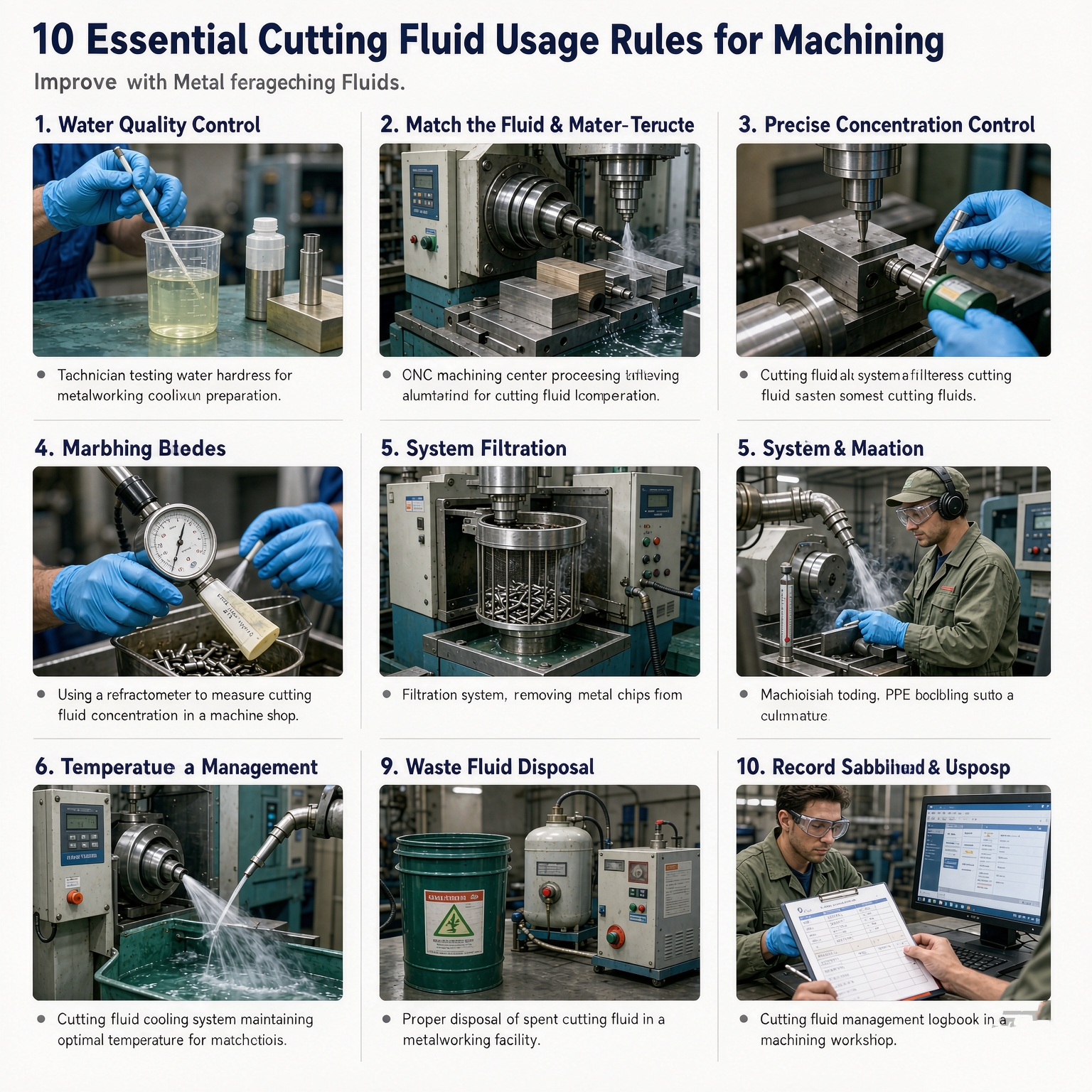
In metalworking, cutting fluid is often called the "lifeblood of the machine tool." Proper management directly impacts tool life, surface finish, operational costs, and environmental compliance.
At Rolitom Metalworking Fluid Lab, we’ve compiled the 10 most critical usage specifications based on years of R&D and field application. Follow these rules to optimize your machining process and avoid common pitfalls.
1. Water Quality Control: The First Step to Stability
The quality of your dilution water determines the performance of your emulsion.
Recommendation: Always use tap water or deionized water.
Avoid: Reclaimed water, recycled water, or high-hardness groundwater.
Why: Calcium and magnesium ions in hard water react with additives, causing soap scum, equipment scaling, and severe rust on workpieces.
2. Match the Fluid to the Material & Tool
There is no "universal" cutting fluid.
Considerations: Match the fluid to your workpiece material (e.g., Aluminum, Stainless Steel, Cast Iron), tool type (HSS vs. Carbide), and process (Turning, Milling, Drilling, or Grinding).
Result: The right match ensures maximum cooling efficiency and lubricity.
3. Precise Concentration Control
Don't guess the ratio—measure it.
Action: Use a refractometer to monitor concentration daily.
Risk: Low concentration leads to rust and poor lubrication. High concentration causes foaming, skin irritation, and wasted money.
Tip: Always follow the supplier’s recommended mixing ratio.
4. System Cleaning: Prevent Cross-Contamination
Switching fluids? Clean the system first.
Procedure: Before filling new fluid, thoroughly clean the sump, pipes, nozzles, and filters.
Critical Note: If you previously used oil-based fluids, removing residual sludge is essential to prevent the new emulsion from breaking down prematurely.
5. Circulation & Filtration
Keep the fluid moving and clean.
Maintenance: Ensure the circulation system runs smoothly. Clean filters regularly to remove metal chips and debris.
Benefit: Proper filtration prevents nozzle blockages, reduces re-cutting of chips, and improves surface finish.
6. Microbial Control (Bacteria Prevention)
Bad odor? It’s likely bacteria.
Issue: Warm, nutrient-rich fluids are a breeding ground for microbes, leading to "Monday morning odor" and fluid failure.
Solution: Add approved biocides regularly and keep the system clean to inhibit bacterial growth.
7. Temperature Management
Temperature affects chemistry.
Range: Maintain a working temperature between 20–35°C (68–95°F).
Impact: High temperatures accelerate bacterial growth; low temperatures reduce lubrication and cooling efficiency. Consider a chiller for high-precision operations.
8. Safety & Health (PPE)
Protect your operators.
Equipment: Provide gloves, safety goggles, and protective clothing.
Environment: Ensure adequate workshop ventilation or install mist collectors to prevent respiratory irritation from aerosolized fluids.
9. Waste Fluid Disposal & Compliance
Never dump spent coolant.
Regulation: Follow local environmental laws (EPA, EU, etc.).
Methods: Use evaporation, centrifugation, or licensed waste disposal services to handle spent fluid responsibly.
10. Record Keeping & Monitoring
Data drives optimization.
Log: Maintain a logbook for mixing ratios, concentration checks, biocide additions, and cleaning schedules.
Goal: Use this data to predict fluid life, optimize usage, and ensure traceability for audits.
Optimize Your Metalworking Process
Managing cutting fluid is not just about maintenance—it's about maximizing efficiency and reducing total cost per part.
Contact: LilyLu
Phone: +86 138 2603 0637
E-mail: lilylu@rolitom.com
Whatsapp:+8613826030637
Add: Room 426, No.1218 Zhongshan Avenue Middle, Tianhe District, Guangzhou City,China
We chat