Modern metalworking operations demand cutting fluids that deliver exceptional cooling, lubrication, and corrosion protection while remaining cost-effective and environmentally responsible. Water soluble cutting fluid has become the dominant choice across machine shops, die casting facilities, and precision manufacturing plants worldwide. These versatile fluids combine the superior heat removal properties of water with carefully engineered additive packages that provide lubricity, rust inhibition, and biological stability. Understanding the chemistry, application methods, and maintenance requirements of water soluble cutting fluid is essential for maximizing tool life, improving surface finish quality, and controlling operational costs in today's competitive manufacturing environment.
Understanding Water Soluble Cutting Fluid Chemistry
Water soluble cutting fluid represents a broad category of MetalWorking Fluids designed to be diluted with water before use. The fundamental advantage lies in water's exceptional specific heat capacity and thermal conductivity, which enables rapid heat removal from the cutting zone during machining operations.
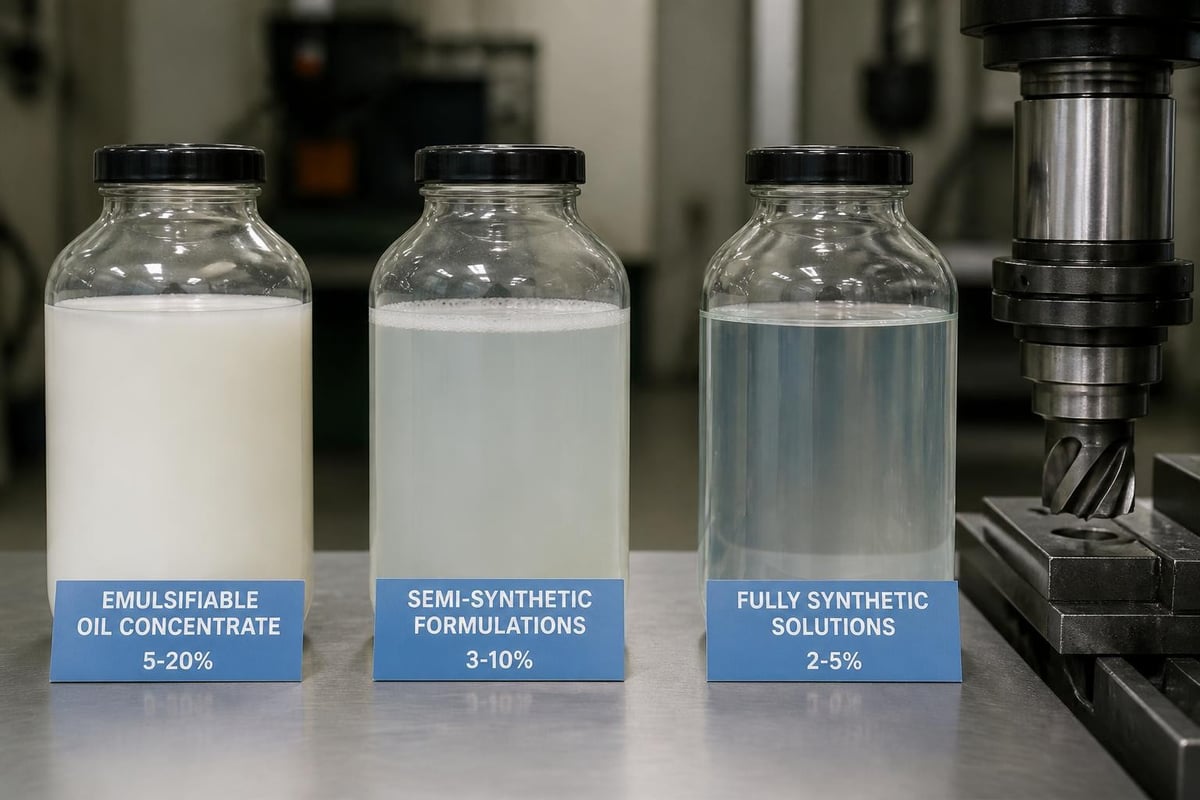
These fluids consist of concentrated formulations containing carefully balanced combinations of emulsifiers, extreme pressure additives, corrosion inhibitors, biocides, and other performance-enhancing components. When mixed with water at ratios typically ranging from 3% to 20%, they form stable emulsions or solutions that deliver targeted performance characteristics.
The chemistry varies significantly across different product types:
Emulsifiable oils contain 50-85% mineral oil with emulsifiers to create milky emulsions
Semi-synthetic fluids blend 5-30% mineral oil with synthetic lubricants and water-soluble polymers
Fully synthetic fluids contain no petroleum oil, relying entirely on synthetic lubricants and chemical additives
Each formulation approach delivers distinct advantages in specific machining applications. Metalworking fluid selection depends on material type, operation severity, and required tool life.
 Key Performance Additives
Modern water soluble cutting fluid formulations incorporate multiple additive systems working synergistically. Extreme pressure (EP) agents protect tooling during heavy interrupted cuts and high-feed operations. Corrosion inhibitors form protective films on ferrous and non-ferrous metal surfaces, preventing oxidation between machining cycles.
Emulsifiers maintain stable oil-in-water dispersions, preventing phase separation during storage and use. Biocides control bacterial and fungal growth that would otherwise degrade fluid performance and create health hazards. Defoamers ensure proper fluid circulation and visibility of the workpiece.
The Water Soluble Corrosion Inhibitor P200 exemplifies advanced corrosion protection technology specifically engineered for ferrous metals including cast iron and carbon steel, offering low residue and easy cleaning while maintaining stability even in hard water conditions. This type of specialized component significantly enhances the rust prevention capabilities of synthetic coolant formulations.
 Types and Applications in Metal Machining
Selecting the appropriate water soluble cutting fluid type requires careful consideration of workpiece material, machining operation, and production requirements. Each major category delivers specific performance characteristics suited to particular manufacturing scenarios.
Emulsifiable Oil Concentrates
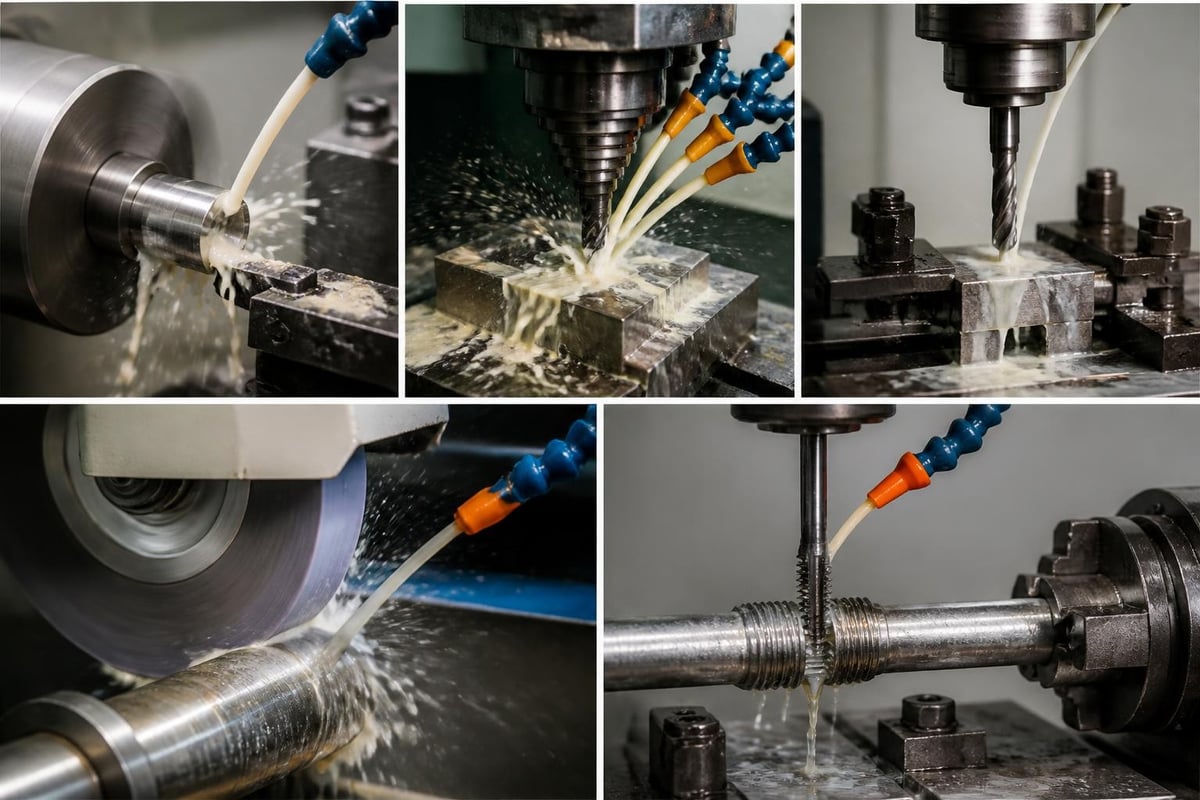
Traditional emulsifiable oils create milky white emulsions when diluted with water, typically at concentrations between 5% and 15%. These fluids excel in general-purpose machining of ferrous metals, providing robust lubrication for turning, milling, and drilling operations.
The high mineral oil content delivers excellent boundary lubrication, protecting cutting edges during heavy chip removal. These formulations work particularly well for machining cast iron, carbon steel, and alloy steels where lubricity takes priority over cooling efficiency.
Application | Typical Concentration | Primary Benefit |
Turning operations | 8-12% | Superior lubrication |
Heavy milling | 10-15% | Tool protection |
Thread cutting | 12-15% | Surface finish |
Drilling deep holes | 8-10% | Chip evacuation |
Semi-Synthetic Formulations
Semi-synthetic water soluble cutting fluid bridges the gap between traditional emulsifiable oils and fully synthetic products. These translucent fluids combine moderate amounts of mineral oil with synthetic lubricants, delivering balanced cooling and lubrication performance.
The reduced oil content improves cooling efficiency compared to straight emulsifiable oils while maintaining adequate lubrication for most precision machining applications. Semi-synthetic fluids demonstrate excellent sump life, resist bacterial degradation, and provide superior visibility of the workpiece during operation.
Manufacturing operations processing aluminum alloys, stainless steel, and exotic metals frequently specify semi-synthetic formulations. The balanced chemistry handles both ferrous and non-ferrous materials effectively, reducing inventory complexity in multi-material shops.
Fully Synthetic Solutions
Fully synthetic water soluble cutting fluid contains no petroleum oil, relying instead on synthetic lubricants, polymers, and chemical additives to deliver performance. These clear to slightly colored solutions provide maximum cooling efficiency, making them ideal for high-speed grinding and precision machining operations.
The absence of mineral oil eliminates concerns about emulsion stability and biological degradation, significantly extending sump life. Synthetic fluids demonstrate exceptional cleanliness, leaving minimal residue on parts and machines. Their transparency allows operators full visibility during critical machining operations.
Grinding operations particularly benefit from synthetic formulations. The superior cooling prevents thermal damage to precision ground surfaces while the low residue characteristics support subsequent processing steps without additional cleaning.
 Selection Criteria for Optimal Performance
Choosing the right water soluble cutting fluid involves evaluating multiple technical and operational factors. Performance requirements vary dramatically across different manufacturing environments and production strategies.
Material Compatibility Considerations
Workpiece material properties fundamentally influence fluid selection. Ferrous metals including carbon steel, tool steel, and cast iron typically tolerate a wide range of formulations. However, aluminum and aluminum alloys demand fluids specifically formulated to prevent staining and maintain surface appearance.
Copper alloys present unique challenges requiring corrosion inhibitors that protect both ferrous machine components and non-ferrous workpieces simultaneously. Titanium and exotic alloys often specify chlorine-free formulations to prevent stress corrosion cracking.
Key material-specific requirements:
Cast iron: Excellent chip settling, moderate lubricity
Carbon steel: Strong rust protection, balanced EP performance
Stainless steel: Low-residue formulations, enhanced lubrication
Aluminum: Non-staining inhibitors, alkalinity control
Copper alloys: Specialized corrosion packages, pH stability
Machining Operation Requirements
Operation severity directly impacts fluid selection. Heavy interrupted cutting, high feed rates, and deep hole drilling demand robust extreme pressure protection and superior lubrication. Conversely, high-speed finishing operations prioritize cooling efficiency and cleanliness over lubricity.
According to OSHA's comprehensive guidance, proper fluid selection significantly reduces workplace exposure risks while improving manufacturing performance. Understanding operation-specific requirements ensures both worker safety and production efficiency.
Operation Type | Critical Properties | Recommended Type |
Heavy roughing | Extreme pressure, lubrication | Emulsifiable oil |
General machining | Balanced cooling/lubrication | Semi-synthetic |
Precision grinding | Maximum cooling, cleanliness | Fully synthetic |
High-speed milling | Heat removal, visibility | Fully synthetic |
Thread forming | Boundary lubrication | Emulsifiable oil |
Environmental and Health Factors
Modern manufacturing increasingly emphasizes worker health and environmental responsibility. Water soluble cutting fluid formulations must minimize health risks while supporting sustainable manufacturing practices.
Chlorine-free and heavy metal-free formulations address environmental concerns and worker safety. Low-mist formulations reduce airborne exposure risks in machining environments. Biodegradable components and extended sump life reduce disposal volumes and associated environmental impact.
European workplace safety perspectives emphasize preventive measures including proper ventilation, personal protective equipment, and fluid maintenance to minimize occupational exposure risks. Selecting fluids with favorable health and safety profiles supports compliance with evolving regulatory requirements.
Proper Dilution and Mixing Procedures
Achieving optimal water soluble cutting fluid performance begins with correct dilution procedures. Improper mixing creates emulsion instability, reduces corrosion protection, and shortens fluid service life.
Water Quality Considerations
Water quality profoundly affects fluid performance and stability. Hard water containing high concentrations of calcium and magnesium salts can destabilize emulsions, reduce corrosion protection, and accelerate biological growth.
Total hardness should ideally remain below 150 ppm for most water soluble cutting fluid formulations. Chloride levels exceeding 50 ppm may promote corrosion of aluminum components. Bacteria counts in makeup water should stay below 100 colony-forming units per milliliter.
Many facilities install water softening or deionization systems to ensure consistent fluid performance. Alternatively, selecting fluids specifically formulated for hard water tolerance provides operational flexibility without additional water treatment infrastructure.
Mixing Methodology
Always add concentrate to water, never water to concentrate. This sequence ensures proper emulsification and prevents localized high concentrations that could separate or form unstable mixtures. The "concentrate to water" rule applies universally across all water soluble cutting fluid types.
Mix at appropriate temperatures, typically between 15°C and 30°C. Excessively cold water slows emulsification while hot water may volatilize critical additives. Gentle agitation during mixing promotes uniform distribution without excessive foam generation.
Step-by-step mixing process:
Fill mixing container with measured quantity of clean water
Start gentle agitation system
Slowly add measured concentrate while maintaining agitation
Continue mixing for 5-10 minutes to ensure complete dispersion
Verify concentration using refractometer before charging to machine sump
Concentration Management
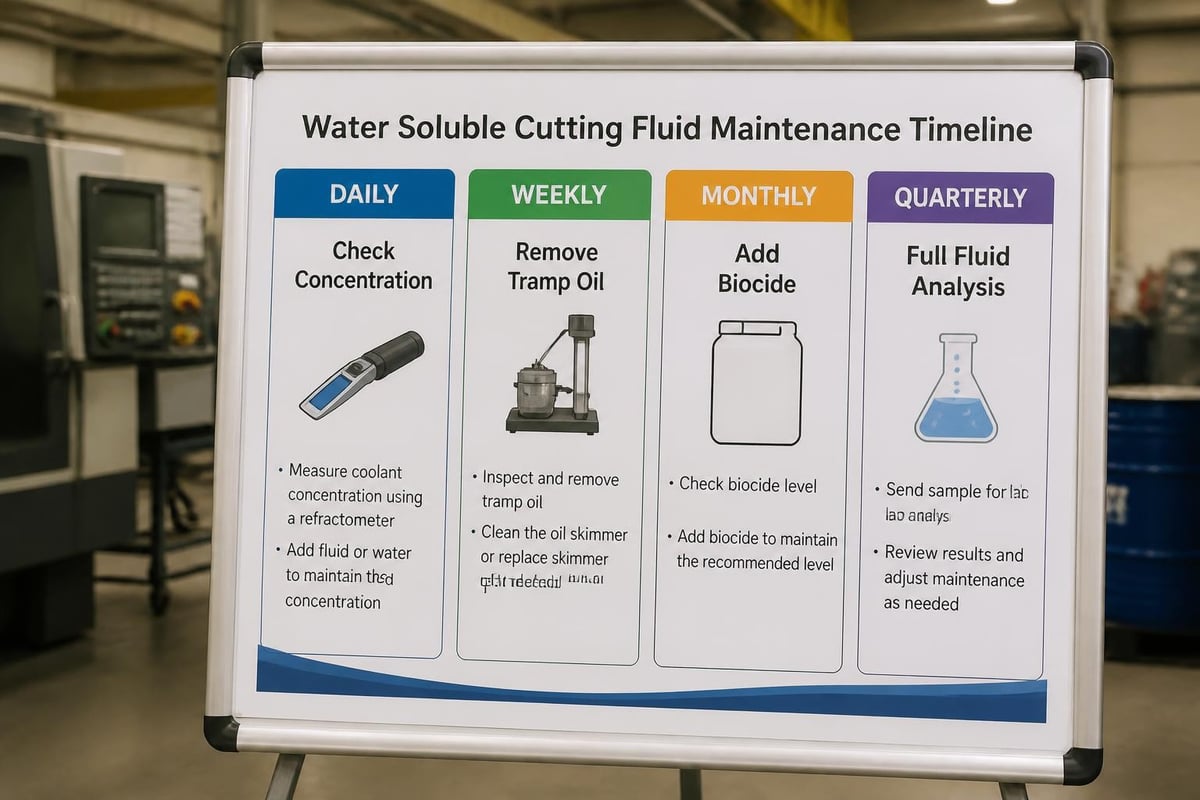
Maintaining proper concentration throughout fluid service life is essential for consistent performance. Refractometers provide quick, accurate concentration measurements that should be verified daily in production environments.
Concentration naturally increases as water evaporates during machining operations. Regular addition of diluted makeup fluid rather than pure water prevents excessive concentration drift. Conversely, fluid carryout on chips and parts reduces concentration, requiring concentrate addition to maintain specification.
Target concentration varies by product and application, but typical ranges span 5-8% for synthetic grinding fluids to 12-15% for heavy-duty emulsifiable oils. Metalworking fluid additive packages are engineered to deliver consistent performance within specified concentration windows.
Maintenance and Monitoring Programs
Systematic maintenance extends water soluble cutting fluid service life while ensuring consistent performance and worker safety. Neglected sumps deteriorate rapidly, creating health hazards and compromising manufacturing quality.
Daily Monitoring Tasks
Concentration checks using refractometers should occur at the start of each production shift. Visual inspection identifies obvious problems including excessive foam, oil contamination, or unusual odors indicating biological growth.
pH measurement provides early warning of fluid degradation or contamination. Most water soluble cutting fluid formulations maintain pH between 8.5 and 9.5 during normal service. Significant pH drift signals biological activity, tramp oil contamination, or concentrate depletion.
Daily monitoring checklist:
Verify concentration using refractometer
Check pH and record results
Inspect for visible contamination or separation
Assess odor for signs of bacterial growth
Monitor machine sump levels and top up as needed
Weekly Maintenance Activities
Skim tramp oil from sump surfaces weekly to prevent anaerobic bacterial growth beneath oil layers. Even thin oil films create conditions favoring harmful bacteria that produce foul odors and reduce fluid performance.
Clean sump walls and floors to remove chip fines and settled solids that harbor bacteria. These deposits create dead zones where biological activity flourishes despite biocide presence in the bulk fluid.
Test biological contamination levels using dip slides or laboratory analysis. As noted in recent research on biological stability, maintaining bacterial counts below 10³ colony-forming units per milliliter prevents most odor and performance problems.
 Extended Service Life Strategies
Modern formulations combined with proper maintenance routinely deliver 6-12 months of service life in well-managed systems. Central coolant systems with large volumes and automated monitoring achieve even longer service intervals.
Temperature control significantly impacts fluid longevity. Maintaining sump temperatures below 35°C reduces evaporation rates, minimizes bacterial growth, and preserves additive stability. Chilling systems or heat exchangers may justify their cost in high-heat machining applications.
According to VDI guidance on production maintenance, systematic fluid management reduces total cost of ownership while improving machining consistency. Professional fluid management programs demonstrate measurable returns through reduced disposal costs, extended tool life, and improved part quality.
Troubleshooting Common Issues
Even well-maintained water soluble cutting fluid systems occasionally develop problems requiring corrective action. Recognizing symptoms and implementing appropriate solutions minimizes production disruption.
Emulsion Instability and Separation
Oil separation creates a distinct layer floating on sump surfaces, different from tramp oil contamination. This indicates emulsifier depletion, hard water interference, or concentrate contamination.
Verify mixing procedures followed proper concentrate-to-water sequence. Check makeup water hardness and compare against fluid specifications. If hardness exceeds recommendations, consider water treatment or switching to hard-water-tolerant formulations.
Adding fresh concentrate may temporarily stabilize marginal emulsions, but persistent separation typically requires fluid replacement. Partial sump changes dilute contaminants while reducing disposal volumes compared to complete changeouts.
Biological Contamination and Odor
Foul odors signal bacterial overgrowth, typically from anaerobic bacteria thriving in low-oxygen environments. These organisms metabolize fluid components, producing sulfurous compounds with characteristic rotten egg smells.
Immediate biocide addition suppresses bacterial populations, but addressing root causes prevents recurrence. Remove tramp oil layers allowing anaerobic conditions. Clean sump thoroughly to eliminate bacterial reservoirs in settled solids. Improve aeration through agitation or air sparging.
Preventive biocide programs maintain biological control more effectively than crisis intervention. Regular additions at 0.1-0.5% concentration prevent population explosions requiring much higher shock doses to control.
Foam Formation Problems
Excessive foam interferes with machining visibility, reduces effective fluid delivery to cutting zones, and creates housekeeping issues. Foam typically results from high-pressure fluid delivery systems, soft water, or contamination with cleaning chemicals.
Foam troubleshooting steps:
Verify concentrate concentration hasn't fallen below specification
Check for contamination with soaps or detergents
Reduce fluid delivery pressure if excessive
Add supplemental defoamer at 0.05-0.1% concentration
Consider switching to low-foam formulation for persistent issues
Corrosion and Staining
Rust on machined parts or machine components indicates inadequate corrosion protection. Verify proper concentration maintenance, as diluted fluids provide reduced corrosion inhibition. Check pH levels, as low pH dramatically reduces corrosion protection effectiveness.
Aluminum staining appears as gray or brown discoloration on machined surfaces. This typically results from excessive alkalinity or incompatible inhibitor systems. Reduce concentration slightly or switch to aluminum-compatible formulations designed for mixed-metal machining.
Environmental Management and Disposal
Responsible environmental stewardship requires proper handling throughout water soluble cutting fluid service life, from initial mixing through final disposal. Regulatory compliance and corporate sustainability goals increasingly influence fluid management decisions.
Waste Minimization Strategies
Extending fluid service life through proper maintenance represents the most effective waste reduction strategy. Well-maintained central systems using appropriate formulations regularly achieve 12-18 month service intervals, dramatically reducing disposal volumes.
Fluid recycling technologies including centrifugation, ultrafiltration, and vacuum distillation remove contaminants and extend usable life. While capital intensive, these systems justify costs in high-volume operations with expensive disposal requirements.
Tramp oil coalescers and skimmers prevent oil contamination that accelerates fluid degradation. Removing foreign oil before it emulsifies into the working fluid maintains performance and extends service intervals.
Disposal Regulations and Methods
Used water soluble cutting fluid typically qualifies as industrial wastewater requiring treatment before discharge. EPA guidance on metalworking fluid management provides comprehensive information on environmental requirements and treatment options.
Chemical treatment breaks emulsions, allowing oil-water separation. Coagulants and flocculants aggregate suspended solids for removal. The treated water phase may discharge to sanitary sewers if it meets local pretreatment standards, while concentrated sludge requires disposal as industrial waste.
Many facilities contract with waste management services specializing in metalworking fluid disposal. These vendors employ permitted treatment facilities achieving compliant discharge while relieving manufacturers of disposal liability.
Sustainable Formulation Trends
The industrial lubricants sector increasingly emphasizes sustainable chemistry and renewable materials. Biodegradable base stocks and additives reduce environmental persistence after disposal. Reduced toxicity formulations minimize aquatic impacts if discharge occurs.
Concentrate packaging innovations reduce plastic waste through bulk delivery systems and reusable containers. Some manufacturers offer closed-loop programs recovering used packaging for cleaning and refilling.
Advanced Performance Optimization
Maximizing water soluble cutting fluid return on investment requires systematic optimization of fluid selection, application methods, and maintenance practices. Data-driven approaches identify improvement opportunities across manufacturing operations.
Tool Life Extension
Properly selected and maintained water soluble cutting fluid significantly extends cutting tool service life. Adequate lubrication reduces friction and heat generation at the tool-chip interface. Effective cooling prevents thermal softening of cutting edges. Corrosion protection maintains sharp edges between cutting cycles.
Document tool life systematically across different operations, materials, and fluid types. Statistical analysis reveals performance patterns supporting fluid optimization decisions. Even modest tool life improvements of 15-20% justify premium fluid costs through reduced tooling expenses.
Compare performance across similar operations using different fluid types. Semi-synthetic formulations may extend tool life 30-50% versus conventional emulsifiable oils in aluminum machining applications. Fully synthetic grinding fluids often double wheel life compared to conventional coolants.
Surface Finish Improvement
Water soluble cutting fluid chemistry directly influences surface finish quality through lubrication, cooling, and cleanliness characteristics. Synthetic formulations generally deliver superior finish on precision ground surfaces through enhanced cooling and reduced residue formation.
Semi-synthetic products balance finish quality with lubrication on turned and milled surfaces. The moderate oil content provides boundary lubrication supporting smooth chip formation while synthetic components ensure adequate cooling and cleanliness.
Surface finish optimization approaches:
Match fluid viscosity to surface speed and feed rates
Increase concentration slightly for improved lubrication on finishing passes
Verify adequate fluid flow rate reaches cutting zone
Filter recirculated fluid to remove fine particles affecting finish
Control temperature to maintain consistent lubrication characteristics
Production Rate Enhancement
Optimized cooling allows increased cutting speeds and feed rates without compromising tool life or surface quality. High-performance water soluble cutting fluid enables aggressive material removal rates impossible with marginal coolants.
Calculate metal removal rates systematically, comparing productivity across different fluids and concentrations. Operations limited by thermal constraints rather than machine power frequently achieve 20-40% productivity gains through fluid optimization.
Central coolant systems with adequate flow capacity support higher performance levels than individual machine sumps. Large reservoir volumes moderate temperature fluctuations while facilitating automated concentration and contamination control.
Water soluble cutting fluid selection, application, and maintenance directly impact manufacturing quality, productivity, and profitability across metalworking operations. Understanding fluid chemistry, matching formulations to specific applications, and implementing systematic maintenance programs maximize return on coolant investment while supporting worker safety and environmental responsibility. Guangzhou Rolitom Lubricant Technology CO.,LTD leverages over 20 years of expertise developing advanced metalworking fluid formulations and additive packages specifically engineered for demanding industrial applications, offering technical support to optimize your fluid management program for maximum performance and economy.
Contact: LilyLu
Phone: +86 138 2603 0637
E-mail: lilylu@rolitom.com
Whatsapp:+8613826030637
Add: Room 426, No.1218 Zhongshan Avenue Middle, Tianhe District, Guangzhou City,China
We chat