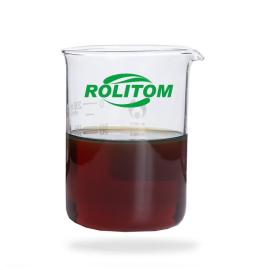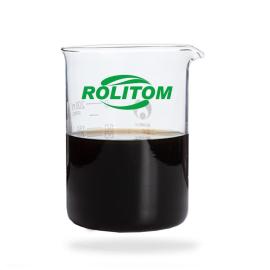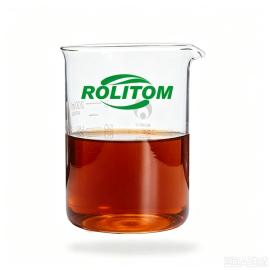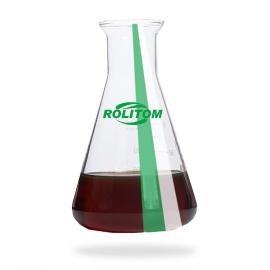
ROLITOM RLT-T702 is high-performance anionic sodium petroleum sulfonate with strong emulsification and inherent metal anti-rust capacity. With adjustable dosage of 1 wt% ~ 10 wt%, it serves as core emulsifier for soluble oil & microemulsion cutting fluids, as well as foaming, lubricating and detergent raw materials for textile printing and cleaning industries.

Formulators of MetalWorking Fluids, textile auxiliaries and industrial cleaning agents often struggle to source a versatile anionic surfactant that balances stable emulsification, long-term metal corrosion inhibition and multi-scenario compatibility. Many single-function emulsifiers fail to provide sufficient rust prevention for ferrous workpieces or show poor miscibility across different base oil systems.
ROLITOM RLT-T702 sodium petroleum sulfonate is a high-performance anionic surfactant engineered to solve these formulation bottlenecks. It features exceptional hydrophilic molecular structure, delivering powerful emulsifying capacity alongside reliable multi-metal anti-rust performance in water-oil mixed systems.
This multi-purpose raw material acts as a core emulsifier when compounding soluble cutting oils and water-based microemulsion metalworking fluids. Beyond metal processing chemistry, it also serves as functional foaming agent, boundary lubricant and industrial detergent raw material for textile printing, dyeing and heavy-duty cleaning production lines, supporting cross-industry formulation demands with one single additive.
Product Advantages
Powerful hydrophilic structure with outstanding universal emulsification capacity
Its unique anionic sulfonate molecular structure enables stable fusion of mineral base oil and water phases, preventing oil-water separation, flocculation or sediment in long-stored finished coolants and textile auxiliary liquids. It maintains uniform emulsion status under variable temperature environments for downstream finished products.
Built-in metal anti-corrosion property for ferrous & non-ferrous substrates
RLT-T702 passes strict 100℃ 2-hour copper strip corrosion test without discoloration or pitting. When added to metalworking fluid formulas, it forms a thin protective film on steel, iron and copper surfaces to block oxidation and rust generation during machining and part storage.
Multi-industry dual-scenario applicability cuts raw material procurement costs
One additive meets two major manufacturing sectors: metalworking fluid production and textile printing & cleaning chemical manufacturing. Factories do not need to purchase separate emulsifier, lubricant and foaming agent raw materials for different product lines, simplifying inventory management and procurement cycles.
Controlled low impurity indicators to guarantee finished product stability
The formula limits inorganic salt and water content within tight thresholds, avoiding salt precipitation, filter clogging and performance attenuation in long-running industrial circulation systems of machine tools and textile equipment.
Wide dosage adjustment range for flexible customized formulation
Usable addition proportion spans 1% to 10% by weight. Formulators can flexibly adjust the dosage according to target finished product viscosity, emulsification strength and anti-rust grade to match diverse production requirements.
Typical Physical & Chemical Performance Indexes
| Test Item | Qualified Technical Standard |
| Appearance | Dark brown homogeneous viscous liquid |
| Sodium Sulfonate Content | ≥50 wt% |
| Mineral Oil Content | ≥50 wt% |
| Inorganic Salt Content | ≤0.35 wt% |
| Water Content | ≤1.0 wt% |
| Copper Strip Corrosion Test (100℃, 2h) | Fully Passed, no corrosion & discoloration |
Standard Application Guidance
Mandatory Pre-Production Compatibility TrialRLT-T702 delivers varying emulsification effects when matched with different base oils, solvents and auxiliary additives. All manufacturers must conduct small-batch lab compatibility tests before full-scale mass batching to confirm emulsion stability, rust resistance and foaming performance of finished products.
Recommended Weight Dosage Range Adjust the additive proportion within 1 wt% ~ 10 wt% based on finished product.
200L sealed carbon steel drum as default packaging for bulk industrial orders. Custom IBC tote tank supply can be arranged upon customer advance consultation.
Unopened original sealed barrels stored in compliance with all storage requirements carry a 24-month shelf life counted from production date.Expired RLT-T702 batches can still be applied to normal formulation work if full re-inspection of all six core physical and chemical indicators meets the qualified standards listed above.
Q1: What dosage range of RLT-T702 sodium petroleum sulfonate is suitable for different formulations?
A1: The recommended addition proportion is 1 wt% ~ 10 wt%. 1–3 wt% suits textile detergents, 3–6 wt% for textile foaming lubricants, and 6–10 wt% is the optimal dosage for soluble oil & microemulsion cutting fluids with high anti-rust demands.
Q2: What core functions can RLT-T702 provide in metalworking fluid formulas?
A2: It works as a high-performance anionic emulsifier to stabilize oil-water systems, and carries built-in metal anti-rust properties. The product passes the 100℃ 2-hour copper corrosion test, effectively avoiding oxidation discoloration of iron and copper workpieces during machining.
Q3: Besides metal cutting fluids, what other industries can RLT-T702 be applied to?
A3: Apart from metalworking coolant production, this sodium petroleum sulfonate can be used as foaming agent, lubricant and detergent raw material for textile printing, dyeing and industrial heavy-duty cleaning formulations.
Q4: Is compatibility testing required before mass batching RLT-T702?
A4: Yes, small-scale lab trials are mandatory. Different base oils and auxiliary additives will generate different emulsification results with RLT-T702, and pre-tests can prevent mass defects such as liquid stratification and weak anti-corrosion performance.
Q5: Can expired RLT-T702 batches continue to be used for production?
A5: Expired raw materials are only allowed to be put into use after full re-inspection of all physical and chemical indicators meets the standard; batches failing the re-test cannot be adopted for formal formulation work.
Contact: LilyLu
Phone: +86 138 2603 0637
E-mail: lilylu@rolitom.com
Whatsapp:+8613826030637
Add: Room 426, No.1218 Zhongshan Avenue Middle, Tianhe District, Guangzhou City,China
We chat