The manufacturing landscape in 2026 continues to demand higher precision, faster production rates, and extended tool life across metal machining operations. At the heart of achieving these objectives lies the strategic application of cutting fluids in metal cutting processes. From high-speed milling to precision turning and grinding operations, these engineered fluids serve as the critical interface between cutting tools and workpieces, managing heat generation, reducing friction, and evacuating chips while protecting both the tool and the finished surface. Understanding the science, selection criteria, and application methods for these fluids has become essential knowledge for machining engineers, production supervisors, and manufacturing decision-makers who seek to optimize their operations while controlling costs.
Understanding the Core Functions of Cutting Fluids
Cutting fluids in metal cutting operations perform multiple simultaneous roles that directly impact machining performance and part quality. The primary function centers on thermal management-removing the intense heat generated at the tool-workpiece interface where metal deformation and friction create temperatures that can exceed 1000°C in certain operations. Without adequate cooling, tools experience accelerated wear, workpieces suffer dimensional instability, and surface finishes deteriorate.
Beyond cooling, lubrication represents an equally critical function. The fluid creates a boundary layer between the cutting edge and the chip, reducing friction coefficients and minimizing the cutting forces required to remove material. This lubrication effect directly translates to lower power consumption, reduced tool wear, and improved surface finish on the machined component.
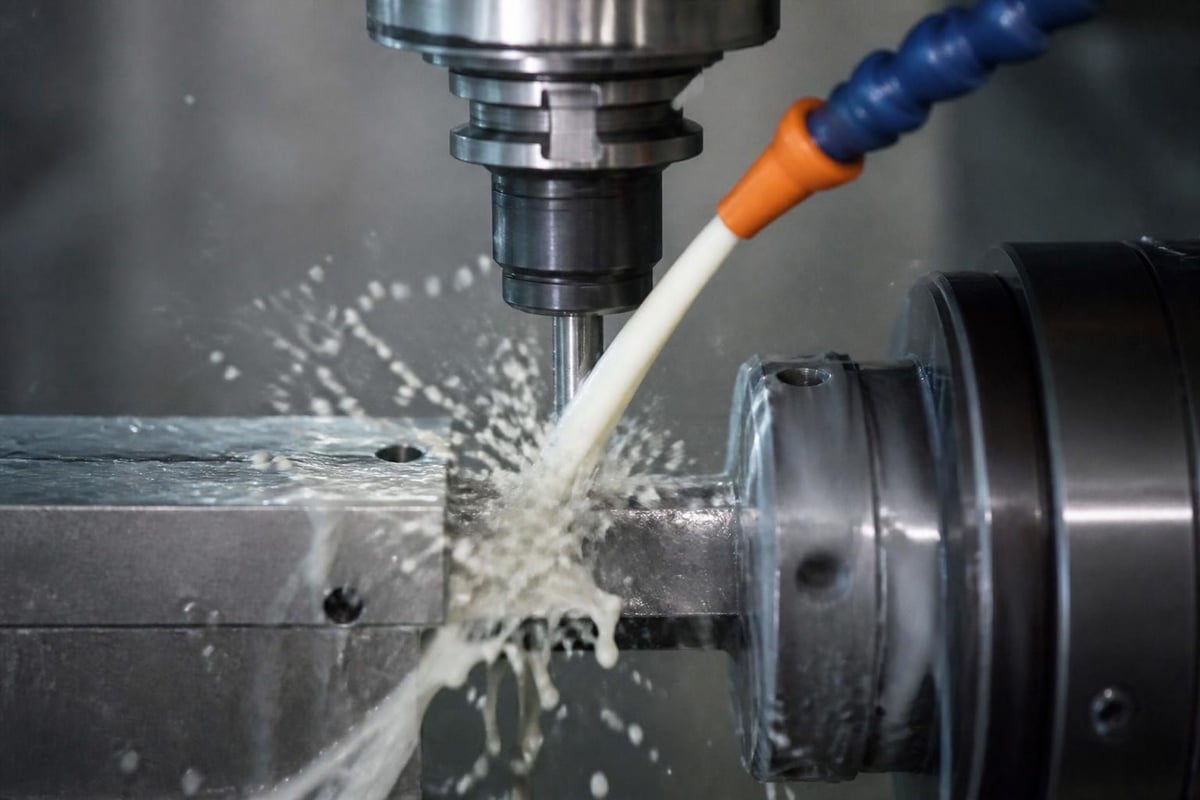
The flushing action provides the third essential function, mechanically removing chips from the cutting zone before they can interfere with the tool path or scratch the finished surface. In deep-hole drilling or slotting operations, effective chip evacuation prevents chip packing that can break tools or damage workpieces. Additionally, modern cutting fluids incorporate corrosion inhibitors that protect both the machined parts and the machine tool itself from rust during processing and short-term storage.
Categories and Chemical Formulations
The landscape of cutting fluids encompasses several distinct categories, each engineered for specific machining conditions and material combinations. Straight oils, also called neat cutting oils, contain no water and rely on petroleum or synthetic base stocks blended with extreme-pressure additives, friction modifiers, and rust inhibitors. These fluids excel in heavy-duty operations like broaching, gear hobbing, and threading where extreme boundary lubrication is paramount.
Soluble oils represent the most widely used category in general machining operations. These emulsifiable concentrates contain 60-90% mineral oil along with emulsifiers, coupling agents, and performance additives. When diluted with water (typically 3-10% concentrate), they form milky emulsions that combine good cooling capacity with adequate lubrication. Their versatility makes them suitable for drilling, milling, and turning operations on ferrous metals.
Fluid Type | Typical Dilution | Primary Advantage | Best Applications |
Straight Oil | Undiluted | Maximum lubrication | Gear cutting, broaching, threading |
Soluble Oil | 3-10% | Balanced cooling & lubrication | General turning, milling, drilling |
Semi-Synthetic | 2-5% | Good cooling, moderate lubricity | High-speed machining, grinding |
Fully Synthetic | 2-5% | Excellent cooling, visibility | Precision grinding, CNC operations |
Semi-synthetic fluids bridge the gap between soluble oils and synthetic solutions, containing 5-50% mineral oil suspended in a synthetic fluid package. These formulations offer superior cooling compared to soluble oils while maintaining reasonable lubrication performance, making them popular for high-speed machining centers and grinding operations.
Fully synthetic fluids contain no petroleum oil, relying instead on synthetic lubricants, polymers, and specialized additives dissolved in water. Recent research on cutting fluid performance in micro-milling demonstrates how synthetic formulations excel in precision operations where tool visibility and heat removal are critical. These fluids form clear solutions that allow operators to monitor the cutting process, provide excellent cooling, and resist bacterial contamination better than oil-containing products.
Delivery Methods and Application Techniques
The method of delivering cutting fluids to the cutting zone profoundly influences machining outcomes. Traditional flood cooling pumps large volumes of fluid (typically 20-200 liters per minute) over the cutting area, ensuring continuous heat removal and chip flushing. While effective, this approach consumes significant fluid volumes, creates disposal challenges, and exposes operators to mist hazards.
Minimum quantity lubrication (MQL) has emerged as a sustainable alternative, delivering micro-droplets of fluid at flow rates of 10-100 milliliters per hour. Studies on recent advances in MQL for steel machining show that when properly implemented with appropriate nozzle positioning and air pressure settings, MQL can achieve comparable or superior results to flood cooling while reducing fluid consumption by 99%. The technique works particularly well with vegetable-based oils and nano-enhanced fluids.
High-Pressure Coolant Systems
High-pressure coolant delivery, operating at 70-300 bar, forces fluid directly into the cutting zone through specially designed tool holders and inserts with internal channels. This approach proves invaluable for deep-hole drilling, turning with chip breakers, and other operations where chips must be evacuated from confined spaces. The pressurized stream breaks chips into manageable segments and prevents chip rewelding to the workpiece.
Through-tool delivery integrates coolant channels directly into cutting tools, delivering fluid precisely where heat generation is most intense. Modern CNC machine tools increasingly feature through-spindle coolant capability, enabling optimal fluid placement without external nozzle adjustments. This precision reduces total fluid consumption while improving cooling effectiveness at the critical tool-workpiece interface.
Material-Specific Considerations
Different workpiece materials generate distinct challenges that influence cutting fluid selection. Ferrous metals including carbon steels, alloy steels, and cast iron typically machine well with soluble oils or semi-synthetic fluids that balance cooling and lubrication. Cast iron's graphite content provides some self-lubrication, often allowing successful dry or MQL machining, though flood cooling helps control dust and dimensional accuracy.
Stainless steels generate significant heat due to their low thermal conductivity and work-hardening characteristics. These materials demand cutting fluids with robust extreme-pressure additives and superior cooling capacity. Sulfur-based EP additives, while effective, must be carefully formulated to avoid staining on austenitic grades. Many formulators now design specialized metalworking fluid additive packages that deliver the necessary performance without corrosive side effects.
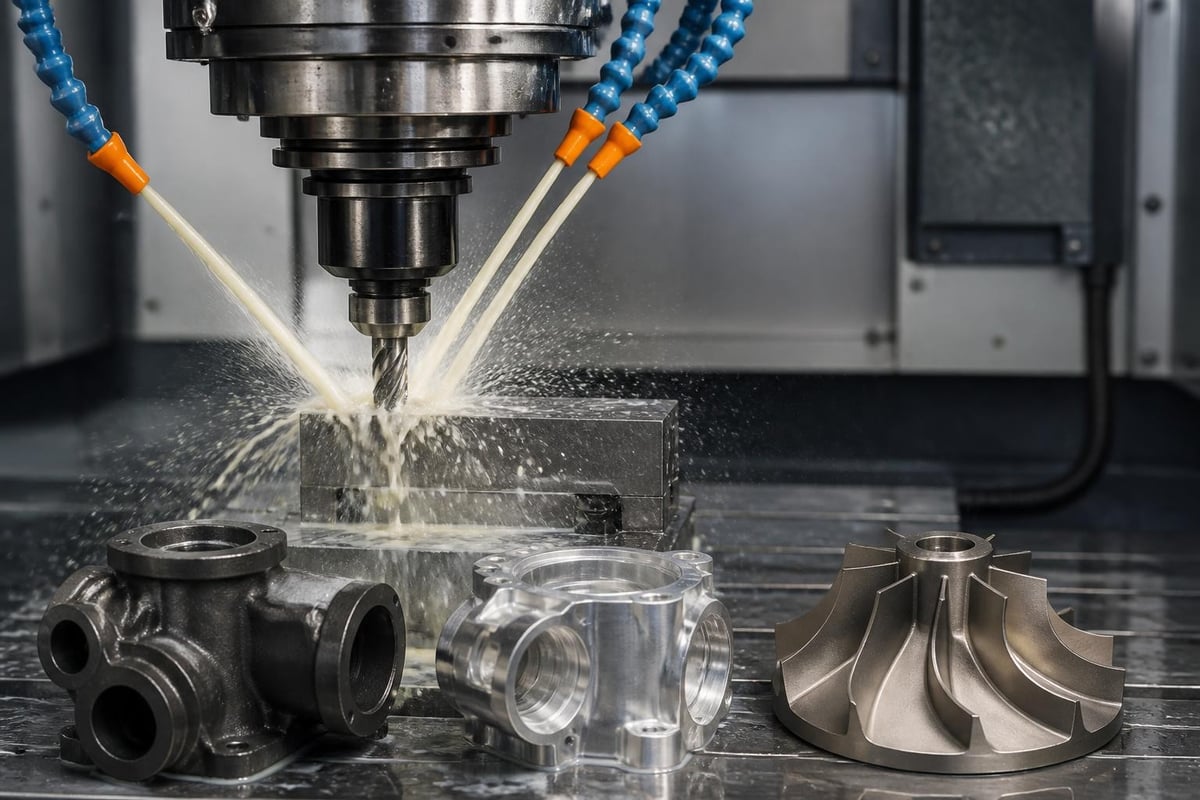
Aluminum and aluminum alloys: Require alkaline, non-staining formulations free of copper, lead, and zinc compounds
Titanium: Demands extreme-pressure fluids with controlled reactivity to prevent combustion risks
Nickel-based superalloys: Need aggressive cooling and lubrication to manage work-hardening and high cutting temperatures
Non-ferrous metals present unique formulation challenges. Aluminum machining requires fluids with carefully controlled pH (typically 8.5-9.5) and specific corrosion inhibitors that prevent discoloration. Copper and brass machining benefits from formulations without sulfur additives that can cause tarnishing. For manufacturers working with diverse materials, comprehensive metalworking fluid solutions tailored to specific material combinations eliminate the complexity of maintaining multiple fluid systems.
Fluid Maintenance and Lifecycle Management
Proper maintenance extends cutting fluid life, controls costs, and ensures consistent machining performance. Concentration monitoring represents the foundation of fluid management. Operators should measure concentration daily using refractometers, maintaining levels within the manufacturer's specified range. Evaporation concentrates soluble and synthetic fluids over time, while drag-out on parts and chips depletes them, requiring regular adjustment with either concentrate or water.
pH measurement provides early warning of fluid degradation. Fresh soluble oils typically maintain pH between 8.8-9.2, while synthetic fluids run slightly higher at 9.0-9.5. A significant pH drop indicates bacterial contamination, while rising pH may signal evaporation or hard water buildup. Weekly pH testing allows corrective action before machining performance suffers.
Contamination Control Strategies
Tramp oil-hydraulic fluid, slideway lubricant, and other petroleum products that leak into the coolant system-degrades fluid performance and promotes bacterial growth. Skimmers, coalescers, and centrifuges mechanically remove tramp oil before it emulsifies into the working fluid. In facilities experiencing persistent contamination, identifying and repairing leak sources at hydraulic systems and machine tool ways proves more cost-effective than continuously treating symptoms.
Research examining microbial proliferation in cutting fluids confirms that bacteria and fungi not only create odor and health hazards but also degrade the fluid's lubrication and corrosion protection properties. Biocide additions, proper fluid concentration, and weekend circulation prevent microbial blooms. Fully synthetic fluids generally resist bacterial growth better than emulsions due to their lack of petroleum components that serve as nutrient sources.
Maintenance Parameter | Check Frequency | Target Range | Corrective Action |
Concentration | Daily | Per manufacturer spec | Add concentrate or water |
pH | Weekly | 8.8-9.5 | Adjust or replace fluid |
Tramp oil | Daily (visual) | <5% | Skim, repair leaks |
Bacterial count | Monthly | <10^6 CFU/mL | Add biocide, improve circulation |
Chip and particulate removal through filtration and settling extends fluid life by preventing abrasive wear on pumps and nozzles while reducing the tendency for chips to resuspend and scratch machined surfaces. Paper media filters, magnetic separators, and settling tanks each address different particle size ranges and contamination types common in specific machining operations.
Selection Criteria for Optimal Performance
Choosing the appropriate cutting fluid requires analyzing multiple operational factors simultaneously. Machining operation type serves as the primary decision driver. Grinding operations generate extreme interface temperatures in small contact zones, favoring synthetic or semi-synthetic fluids with superior cooling capacity. Heavy interrupted cuts in milling benefit from soluble oils providing robust lubrication to cushion tool engagement shocks.
Production volume and part mix influence the cost-benefit analysis of fluid selection. High-volume production of similar parts justifies investment in specialized fluids optimized for those specific conditions. Job shops machining diverse materials and operations typically standardize on versatile semi-synthetic fluids that perform adequately across a broad application range, accepting some compromise in any single operation to minimize fluid inventory complexity.
Environmental and regulatory considerations increasingly constrain fluid selection in 2026. Facilities seeking to reduce their environmental footprint gravitate toward bio-based fluids formulated from vegetable oils and synthetic esters. While offering excellent lubricity and biodegradability, these fluids require careful oxidation inhibitor packages to prevent rancidity during extended sump life. Chlorine, heavy metals, and certain biocides face regulatory restrictions in many jurisdictions, requiring formulators to develop alternative chemistries.
Economic Factors
Total cost of ownership extends far beyond the initial purchase price per liter. Concentrate cost, required dilution ratio, expected sump life, disposal expenses, and impact on tool life all contribute to true fluid cost per part produced. A premium synthetic fluid with 10,000-hour sump life and extended tool life may cost less per part than an inexpensive soluble oil requiring frequent changeouts and consuming tools more rapidly.
Machine tool compatibility represents another critical consideration. Some machining centers feature painted surfaces or soft seals that specific fluid chemistries can damage. Manufacturers should consult machine tool builders regarding approved fluid types before making final selections. Equipment warranties may be voided by use of incompatible fluids that cause component failures.
Advanced Formulation Technologies
The cutting fluid industry continues to evolve with emerging additive technologies that enhance performance boundaries. Nano-enhanced fluids incorporating nanoparticles of molybdenum disulfide, graphene, or aluminum oxide demonstrate improved lubrication and heat transfer properties in laboratory and production trials. These nanoparticles create ultra-thin boundary films and enhance thermal conductivity, though questions remain regarding long-term stability and environmental fate.
Polymeric extreme-pressure additives offer alternatives to traditional sulfur and chlorine compounds for applications requiring aggressive boundary lubrication without reactive elements that can stain workpieces or create disposal challenges. These long-chain molecules adhere strongly to metal surfaces under pressure, providing a protective layer that reduces friction and wear.
Companies developing their own fluid formulations or seeking optimized solutions for specific applications benefit from working with experienced suppliers who offer customizable additive packages. Modern metalworking fluid additive packages incorporate multiple functional components-emulsifiers, corrosion inhibitors, EP additives, and biocides-in balanced formulations that simplify blending while ensuring chemical compatibility and performance consistency.
Bio-Based and Renewable Chemistries
Vegetable oil-based cutting fluids manufactured from canola, soybean, and other renewable feedstocks offer several performance advantages beyond their environmental credentials. Natural esters provide inherently superior lubricity compared to mineral oils, often reducing cutting forces and extending tool life in demanding operations. Their high viscosity index maintains consistent performance across temperature variations common in production environments.
The oxidative stability challenge associated with unsaturated fatty acids in vegetable oils has been largely addressed through selective hydrogenation, addition of robust antioxidant packages, and development of high-oleic crop varieties with naturally improved stability. Modern bio-based fluids routinely achieve sump lives comparable to petroleum-based products in properly maintained systems.
Integration with Modern Manufacturing Systems
Smart manufacturing initiatives and Industry 4.0 concepts extend to cutting fluid management through sensors, data analytics, and automated control systems. Inline sensors continuously monitor concentration, pH, temperature, and contamination levels, feeding data to programmable logic controllers that automatically adjust makeup additions or trigger maintenance alerts before fluid degradation affects part quality.
Predictive maintenance algorithms analyze fluid condition trends to forecast when sump changeouts will be required, enabling scheduled downtime coordination rather than reactive emergency fluid replacement. These systems consider machining schedules, fluid age, contamination rates, and performance metrics to optimize fluid lifecycle economics while maintaining consistent machining results.
Centralized coolant systems serving multiple machine tools reduce floor space requirements, simplify maintenance through single-point control, and improve consistency by ensuring all machines operate with properly maintained fluid. These systems incorporate filtration, temperature control, and automated concentration management that would be cost-prohibitive to implement at each individual machine. The trade-off involves increased complexity and the risk that fluid contamination or formulation issues affect multiple production cells simultaneously.
Health, Safety, and Environmental Considerations
Metalworking fluid mist and aerosol exposure represents a significant occupational health concern that influences both fluid selection and application method choices. Prolonged skin contact with cutting fluids can cause dermatitis, while inhalation of fluid mist contributes to respiratory conditions. MQL systems reduce but do not eliminate mist generation, requiring continued attention to ventilation and personal protective equipment.
Modern fluid formulations increasingly eliminate or minimize components associated with health concerns. Formaldehyde-releasing biocides, nitrite corrosion inhibitors, and certain amine compounds face scrutiny due to allergenic or toxicological properties. Formulators have developed alternative chemistries that maintain performance while reducing health risks, though these substitutions sometimes require application adjustments or increased costs.
Waste fluid disposal regulations vary significantly by jurisdiction but universally require proper management rather than simple drain disposal. Used cutting fluids may be classified as hazardous waste depending on metal content and chemical composition. Oil-water separation, chemical treatment, and licensed disposal represent standard practices, with costs ranging from $0.50 to $3.00 per liter depending on contamination levels and local requirements. These disposal economics provide additional incentive for extended fluid life through proper maintenance and consideration of more durable synthetic formulations.
Selecting and managing cutting fluids in metal cutting operations requires balancing technical performance, economic factors, and environmental considerations across diverse machining applications and materials. Successful implementation combines appropriate fluid chemistry with proper delivery methods, rigorous maintenance protocols, and attention to safety requirements. For manufacturers seeking to optimize their metalworking fluid programs with customized formulations backed by two decades of industrial lubrication expertise, Guangzhou Rolitom Lubricant Technology CO.,LTD offers comprehensive additive packages and technical support tailored to specific production requirements and performance objectives.
Contact: LilyLu
Phone: +86 138 2603 0637
E-mail: lilylu@rolitom.com
Whatsapp:+8613826030637
Add: Room 426, No.1218 Zhongshan Avenue Middle, Tianhe District, Guangzhou City,China
We chat