Marine vessels operate in one of the most demanding environments imaginable, where saltwater exposure, extreme temperatures, and continuous mechanical stress challenge every component. Effective lube marine systems represent the critical difference between reliable operations and costly failures at sea. As regulations tighten and environmental awareness grows, selecting the right marine lubricants requires understanding performance requirements, compliance standards, and long-term maintenance strategies that protect both equipment and ocean ecosystems.
Understanding Lube Marine System Requirements
Marine lubrication systems must withstand conditions that would destroy conventional lubricants within hours. Saltwater intrusion, thermal cycling between engine heat and cold seawater, and constant vibration create unique challenges that demand specialized formulations.
Critical Performance Characteristics
The most effective lube marine products deliver multiple protective functions simultaneously. Load-carrying capacity ensures that lubricants maintain film strength under the extreme pressures found in propulsion systems and auxiliary equipment. Oxidation stability prevents breakdown when exposed to high temperatures in engine compartments, while water separation properties allow lubricants to shed moisture rather than emulsify with it.
Superior anti-wear protection for cylinder walls and bearings
Thermal stability across temperature ranges from freezing to 250°F
Resistance to saltwater contamination and corrosion
Extended drain intervals to reduce maintenance during voyages
Compatibility with seals and gasket materials
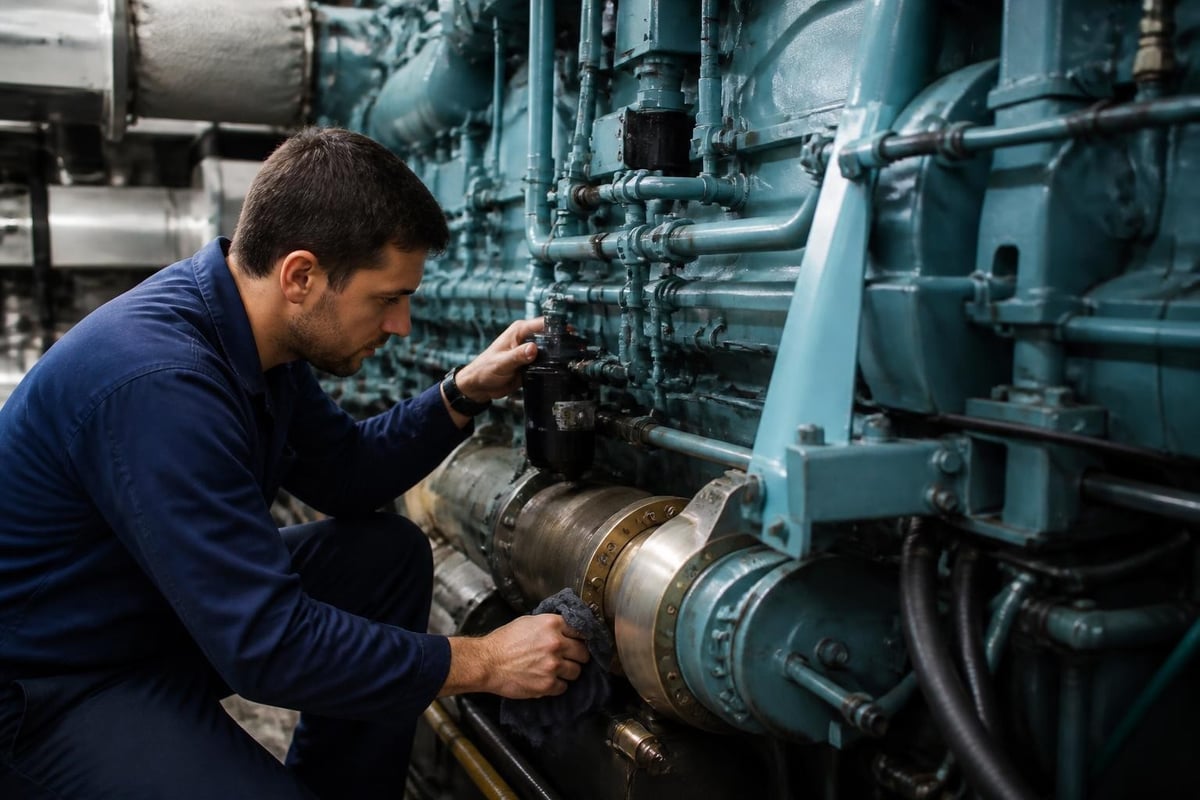
Modern vessels increasingly rely on advanced lubrication formulations that meet multiple operational demands while reducing environmental impact.
Base Oil Selection and Additive Technology
Marine lubricants typically use mineral oils, synthetic esters, or polyalphaolefins as base stocks, each offering distinct advantages. Mineral oils provide cost-effectiveness and proven performance for general applications. Synthetic options deliver superior performance in extreme temperatures and extended service intervals.
The additive package technology transforms base oils into high-performance lube marine products through carefully balanced chemistry. Anti-oxidants prevent thermal degradation, detergents neutralize acidic combustion byproducts, and dispersants keep contaminants suspended to prevent sludge formation.
Additive Type | Primary Functio | Marine Application Benefit |
Zinc dialkyldithiophosphat | Anti-wear protectio | Extends engine component life |
Calcium sulfonates | Detergency and alkalinity | Neutralizes fuel combustion acids |
Ashless dispersant | Contaminant suspensio | Prevents deposit formatio |
Corrosion inhibitors | Metal protection | Guards against saltwater damage |
Environmental Regulations Shaping Marine LubricantsThe marine industry faces increasingly stringent environmental regulations governing lubricant composition and discharge. The U.S. Environmental Protection Agency's Safer Choice Standard establishes criteria for environmentally acceptable marine lubricants that minimize aquatic toxicity while maintaining performance standards.
Environmentally Acceptable Lubricants (EALs)
Environmentally Acceptable Lubricants represent the industry's response to pollution concerns in sensitive waters. The ASTM guide on selecting environmentally acceptable lubricants provides comprehensive evaluation methods and selection criteria for these specialized products.
EALs must demonstrate biodegradability, low aquatic toxicity, and minimal bioaccumulation potential. Readily biodegradable formulations break down to at least 60% within 28 days under standardized test conditions. Ultimately biodegradable products require longer periods but still decompose without persistent environmental harm.
Vessel operators in protected waters, including many coastal zones and nature reserves, now face mandatory EAL requirements for stern tube lubricants, hydraulic fluids, and other systems with potential discharge pathways. Understanding the importance of EALs in marine applications helps operators navigate compliance while maintaining operational efficiency.
Cylinder Lubrication in Two-Stroke Marine Engines
Large two-stroke diesel engines power the majority of commercial cargo vessels, and their cylinder lubrication systems require precise control to balance engine protection with fuel economy. These engines inject lube marine products directly into cylinders to prevent wear while minimizing consumption.
Modern common rail lubrication systems adjust injection timing and quantity based on engine load, fuel sulfur content, and operating conditions. Research into injection rate optimization demonstrates that precise control reduces lubricant consumption by 20-40% compared to traditional systems while maintaining equivalent wear protection.
Alkalinity Management and Fuel Compatibility
The total base number (TBN) of cylinder oils must match fuel sulfur content to neutralize acidic combustion byproducts effectively. High-sulfur fuels require lubricants with TBN values of 70-100, while ultra-low sulfur fuels perform optimally with TBN 25-40 formulations.
Feed rate calculation determines optimal lubricant consumption:
Assess fuel sulfur content through bunker analysis
Calculate expected sulfuric acid formation
Select appropriate TBN lubricant grade
Determine feed rate based on engine manufacturer specifications
Monitor liner condition and adjust as needed
Mismatched TBN and fuel sulfur levels create either insufficient acid neutralization or excessive deposit formation, both of which accelerate wear and reduce efficiency.
Corrosion Prevention in Marine Environments
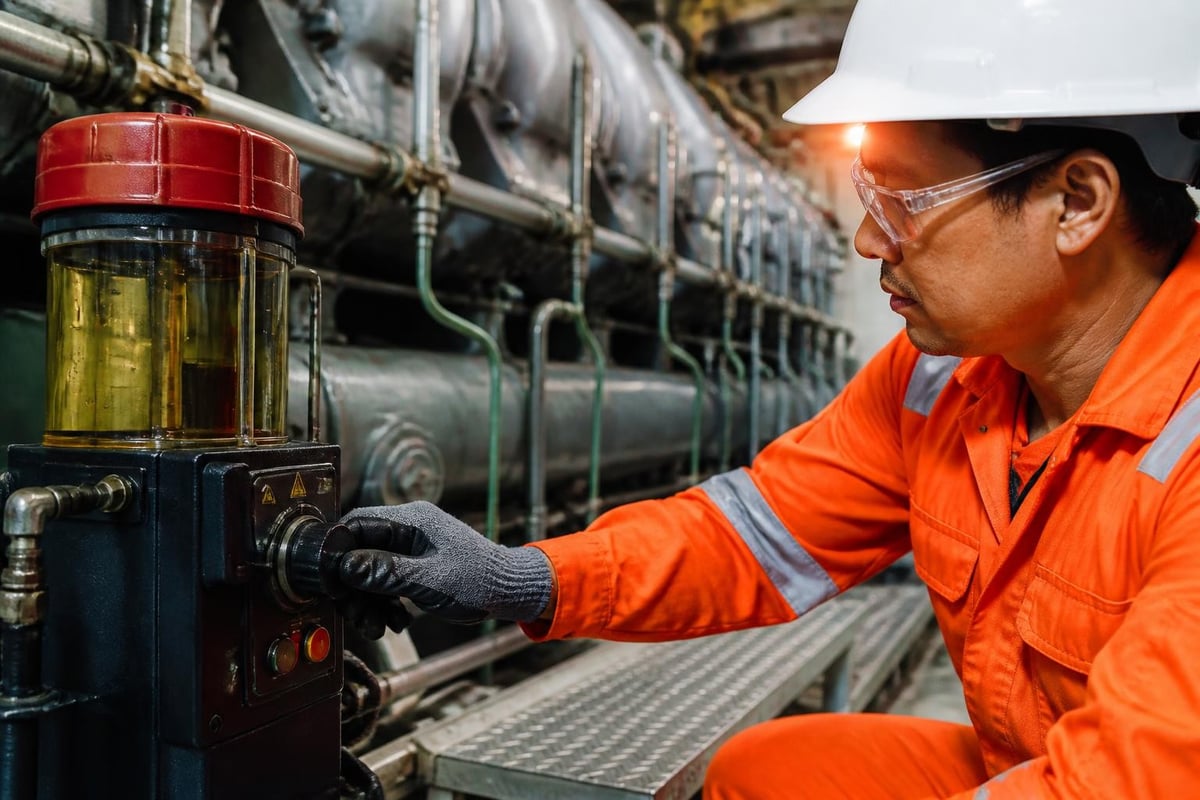
Saltwater creates relentless corrosion pressure on every metal surface aboard vessels, from exposed deck equipment to enclosed machinery spaces where humidity and salt spray penetrate. Effective lube marine corrosion protection extends equipment life and reduces maintenance costs significantly.
The protective mechanism relies on forming barrier films that exclude moisture and oxygen from metal surfaces. Successful formulations must displace water from metal surfaces, resist washing by seawater or rain, and maintain protective properties across temperature variations.
Water Displacement Properties
The ability to displace existing moisture from metal surfaces determines how effectively lube marine products protect equipment exposed to seawater or condensation. Laboratory testing measures water displacement through standardized procedures that simulate real-world conditions.
Surface tension reduction allows lubricants to penetrate beneath water films
Spreading coefficient optimization ensures complete surface coverage
Adhesion strength maintains protective films under washing conditions
Penetration capability reaches crevices and threaded connections
Maintenance Strategies for Marine Lubrication Systems
Systematic maintenance prevents the majority of lube marine system failures while extending lubricant service life and reducing operational costs. Effective programs balance scheduled interventions with condition-based monitoring.
Oil Analysis and Condition Monitoring
Regular oil sampling provides early warning of developing problems before they cause equipment damage. Comprehensive analysis tracks multiple parameters that reveal system health:
Test Parameter | What It Reveals | Action Threshold |
Viscosity change | Thermal stress or contamination | ±10% from new oil |
TBN depletion | Remaining acid neutralization capacity | 50% of original value |
Water content | Seal leaks or condensation | >0.2% by volume |
Iron particles | Wear in ferrous components | Trending increase >10 pp |
Fuel dilution | Combustion seal bypass | >2% by volume |
Trending analysis proves more valuable than single test results, revealing gradual deterioration patterns that predict failures weeks or months in advance. Data-driven fault diagnostic techniques increasingly leverage machine learning algorithms that identify subtle patterns human analysts might miss.
Filter Management and Contamination Control
Filtration systems remove particulate contamination that accelerates wear and depletes additives. Marine environments introduce multiple contamination sources including fuel system leakage, seawater intrusion, and airborne salt particles.
Bypass filtration supplements full-flow filters by continuously polishing a portion of system oil through fine media, removing particles smaller than full-flow filters capture. This approach extends oil life while maintaining cleanliness standards that protect precision components.
Filter change intervals depend on contamination rates rather than fixed schedules. Differential pressure monitoring indicates when filters reach capacity, optimizing replacement timing while preventing bypass valve opening that would circulate unfiltered oil.
System Design Considerations for Optimal Performance
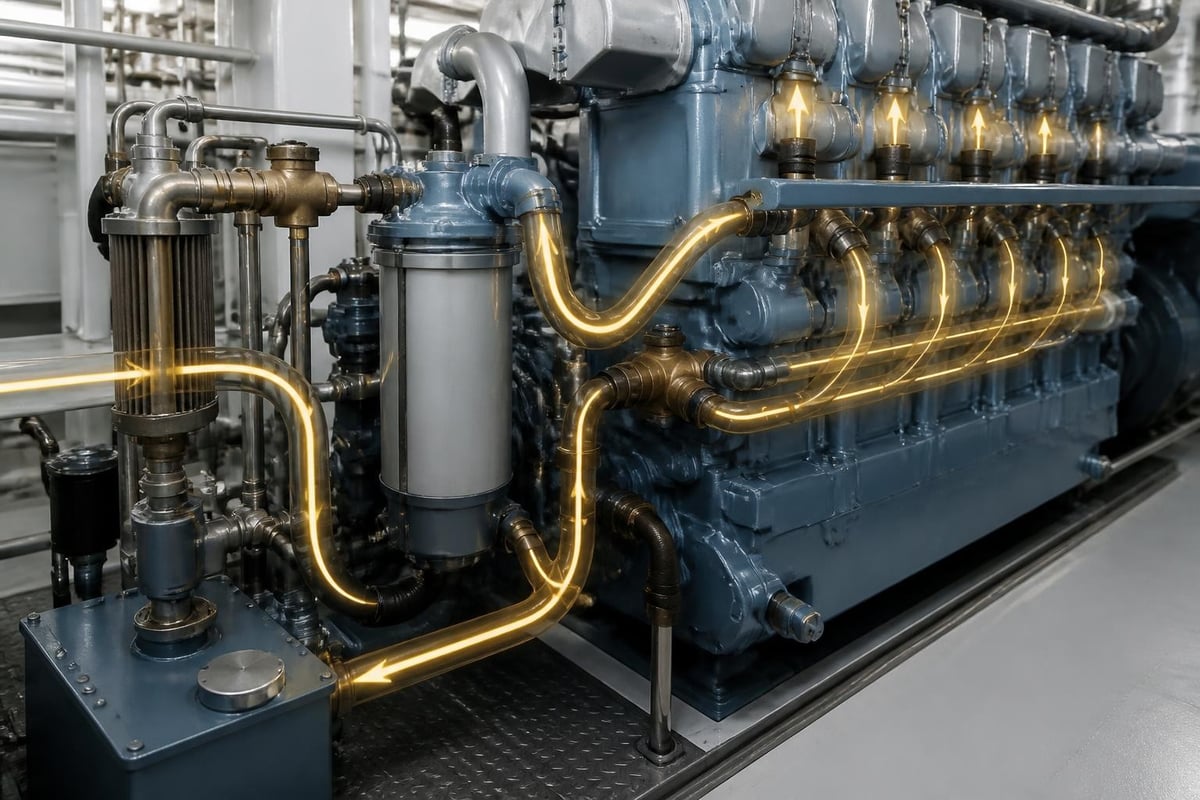
Proper lube marine system design ensures adequate flow, pressure, and cooling across all operating conditions. Undersized components create pressure drops that starve bearings, while oversized systems waste energy and increase initial costs.
Flow Rate Calculations and Pump Selection
Determining required flow rates starts with manufacturer specifications for each lubricated component. Main engine bearings, auxiliary equipment, and cooling requirements each demand specific volumes at defined pressures.
Calculate total system flow requirement from component specifications
Add 15-20% margin for system losses and future expansion
Determine required discharge pressure accounting for elevation and friction losses
Select pump type based on flow characteristics and redundancy requirements
Verify cavitation margins and suction conditions
Positive displacement pumps deliver consistent flow regardless of discharge pressure, making them ideal for cylinder lubrication and other precision applications. Centrifugal pumps provide variable flow at lower cost for general circulation systems.
Temperature Control and Heat Rejection
Maintaining optimal lube marine temperature balances viscosity requirements with thermal stability limits. Most systems target 120-160°F (50-70°C) for crankcase oils, while cylinder lubricants may reach 200°F (95°C) during injection.
Heat exchangers remove thermal energy absorbed from friction and combustion, preventing oxidation that would degrade lubricant performance. Seawater-cooled designs offer excellent capacity but require corrosion-resistant materials and marine growth management. Freshwater intermediate cooling systems reduce corrosion risk while isolating seawater from lubricant in case of leaks.
Advanced Monitoring Technologies
Digital transformation reaches marine lubrication through sensors, connectivity, and analytics that provide unprecedented visibility into system health. The Internet of Underwater Things and Big Marine Data Analytics demonstrates how networked sensors create comprehensive operational awareness.
Modern systems integrate multiple data streams including oil pressure, temperature, flow rates, and contamination levels. Real-time analysis identifies abnormal patterns that indicate developing problems, triggering alerts before failures occur.
Predictive maintenance algorithms analyze historical performance data to forecast component life and optimize service scheduling. Machine learning models trained on fleet-wide data recognize failure precursors across diverse operating conditions, continuously improving prediction accuracy.
Wireless sensors eliminate cabling complexity while enabling monitoring in locations previously considered inaccessible. Battery-powered transmitters report data from remote lubricant reservoirs, bearing housings, and seal cavities, expanding coverage without installation barriers.
Operational Best Practices for Fleet Management
Standardizing lube marine specifications across fleets simplifies inventory management and reduces procurement costs while ensuring consistent performance. However, vessel-specific requirements including engine types, operating profiles, and regional regulations may demand customized approaches.
Lubricant Consolidation Strategies
Fleet managers balance the efficiency of standardization against the performance benefits of application-specific products. Successful consolidation identifies products that meet multiple requirements without compromising critical performance parameters.
Evaluate cross-compatibility of current lubricant inventory
Identify products meeting the most demanding specifications
Test consolidated selections under representative conditions
Implement gradual transition with performance monitoring
Document cost savings and performance outcomes
The latest industry news highlights successful consolidation programs that reduced lubricant SKUs by 40-60% while maintaining or improving equipment reliability.
Crew Training and Documentation
Effective lube marine management requires crew members who understand system operations, recognize abnormal conditions, and execute maintenance procedures correctly. Structured training programs cover theoretical knowledge and hands-on skills.
Documentation systems ensure consistent practices across watch rotations and crew changes. Digital maintenance logs capture service history, oil analysis results, and system modifications, creating comprehensive records that support troubleshooting and regulatory compliance.
Selecting Lubricants for Specific Marine Applications
Different vessel types and operating profiles demand tailored lube marine solutions. Container ships running at constant high speeds require different properties than tugboats with frequent load variations and extended idle periods.
High-Speed Diesel Engines
Modern high-speed marine diesels in patrol boats, ferries, and yachts operate at 1000-3000 RPM, generating severe mechanical and thermal stress. These engines benefit from synthetic lubricants offering:
Enhanced oxidation stability at sustained high temperatures
Superior low-temperature fluidity for reliable cold starts
Reduced volatility to minimize consumption
Extended drain intervals reducing maintenance burden
Fuel quality significantly impacts lubricant selection for high-speed applications. Distillate fuels produce minimal combustion residues, allowing lower TBN formulations that reduce ash-related deposits.
Auxiliary Equipment Lubrication
Beyond main propulsion, vessels operate numerous auxiliary systems including generators, pumps, compressors, and deck machinery. Each application presents unique requirements that generic lubricants may not address optimally.
Hydraulic systems demand excellent filterability, water separation, and anti-wear protection. Compressors require oxidation stability and deposit control. Deck winches need extreme pressure additives for boundary lubrication under shock loads.
Consolidating auxiliary lubricants around multipurpose products that meet diverse requirements simplifies inventory while ensuring adequate protection.
Future Trends in Marine Lubrication Technology
The marine industry faces transformative changes driven by environmental regulations, alternative fuels, and digitalization. Lube marine technology evolves to address these emerging challenges while maintaining the reliability standards that ocean operations demand.
Alternative Fuel Compatibility
LNG, methanol, and hydrogen fuels require lubricants compatible with different combustion characteristics and potential contamination. Gas engines produce minimal soot and sulfur compounds, enabling lower-ash lubricants with extended service intervals.
Dual-fuel engines that switch between conventional and alternative fuels present unique challenges. Lubricants must perform across widely varying combustion temperatures, acid formation rates, and contaminant profiles without compromising protection or accelerating deposit formation.
Biodegradable Formulation Development
Regulatory pressure accelerates development of high-performance biodegradable lube marine products suitable for critical applications beyond current EAL limitations. Ester-based synthetics and vegetable oil derivatives show promise for demanding applications traditionally requiring petroleum products.
Performance gaps in oxidation stability, hydrolytic stability, and load-carrying capacity gradually narrow through additive technology advances and base oil refinement. Within five years, biodegradable options may compete directly with
conventional lubricants across most marine applications.
Selecting and maintaining appropriate lube marine systems protects equipment investments while ensuring regulatory compliance and environmental responsibility. Success requires understanding performance requirements, implementing systematic monitoring, and adapting to evolving technology and regulations. Guangzhou Rolitom Lubricant Technology CO.,LTD brings over 20 years of industrial lubrication expertise to help vessel operators optimize their lubrication programs with specialized additive packages, rust preventive solutions, and technical support for demanding marine environments.
Contact: LilyLu
Phone: +86 138 2603 0637
E-mail: lilylu@rolitom.com
Whatsapp:+8613826030637
Add: Room 426, No.1218 Zhongshan Avenue Middle, Tianhe District, Guangzhou City,China
We chat