Modern manufacturing operations depend heavily on the proper selection and management of coolants and lubricants used during machining processes. These specialized fluids serve multiple critical functions, including heat dissipation, friction reduction, chip removal, and corrosion prevention. Understanding the various types, applications, and maintenance requirements of MetalWorking Fluids enables manufacturers to optimize tool life, improve surface finish quality, and reduce overall production costs while maintaining safe working conditions.
Understanding Metalworking Fluid Categories
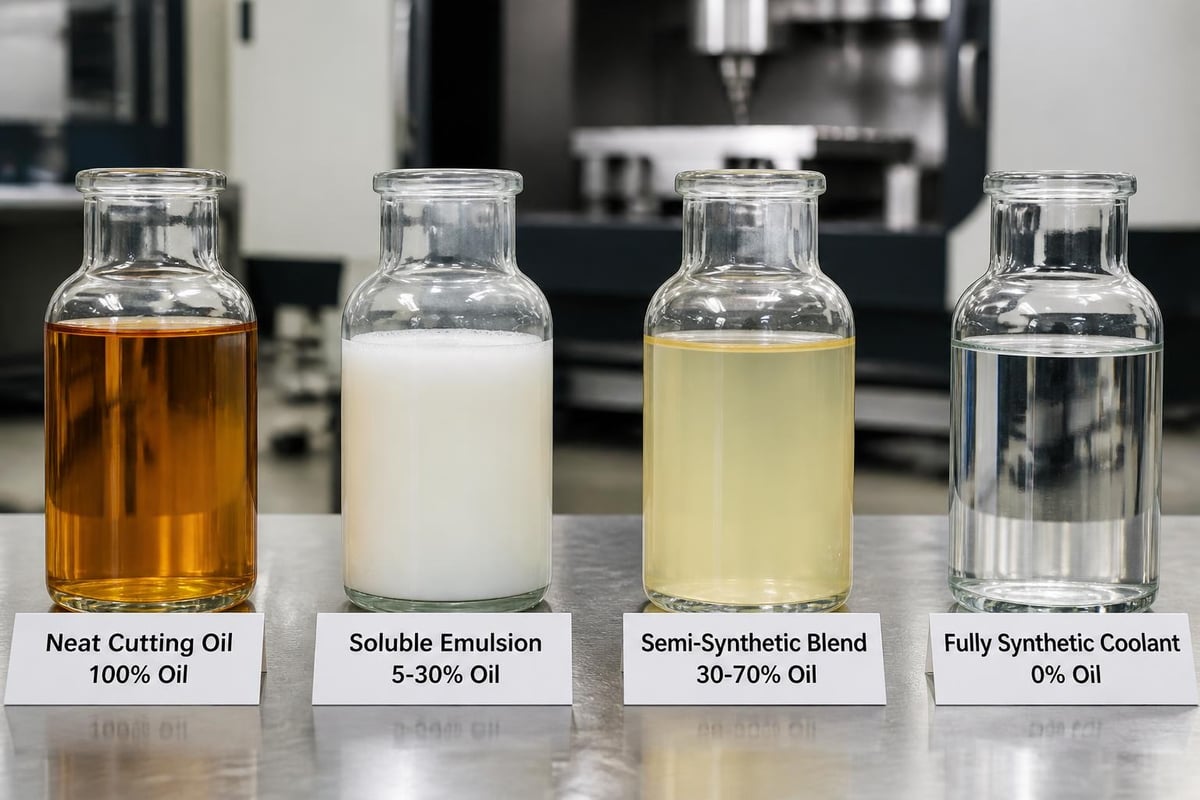
The industrial landscape offers several distinct categories of metalworking fluids, each formulated to address specific machining requirements and operational conditions. Straight cutting oils represent the oldest category, consisting of mineral or synthetic base oils without water dilution. These neat oils provide excellent lubrication for heavy-duty operations such as broaching, gear cutting, and threading where extreme pressure protection is essential.
Water-miscible fluids dominate modern machining environments due to their superior cooling properties and cost-effectiveness. This category subdivides into three main types: soluble oils, semi-synthetic fluids, and fully synthetic formulations. Each type balances lubrication and cooling differently, with soluble oils containing 60-90% mineral oil, semi-synthetics blending 5-50% oil with synthetic additives, and fully synthetic fluids containing no petroleum derivatives.
Chemical Composition and Functional Additives
The performance characteristics of metalworking fluids stem from carefully balanced additive packages that address specific operational challenges. Extreme pressure (EP) additives containing sulfur, phosphorus, or chlorine compounds create protective films on metal surfaces under high-load conditions. Corrosion inhibitors protect both the workpiece and machine tool components from oxidation, while biocides prevent bacterial and fungal growth in water-based systems.
Emulsifiers enable oil droplets to suspend uniformly in water, creating stable mixtures that resist separation during storage and use. Anti-foam agents control foam formation during high-speed machining, maintaining fluid visibility and cooling efficiency. The Health and Safety Executive highlights that proper additive selection directly impacts both performance and worker safety, making formulation expertise critical for manufacturers.
Selection Criteria for Machining Applications
Choosing appropriate metalworking fluids requires evaluating multiple factors including workpiece material, machining operation type, production volume, and environmental considerations. Ferrous metals such as carbon steel and cast iron generally perform well with conventional soluble oils, while aluminum and copper alloys demand specialized formulations that prevent staining and pitting. Stainless steel machining benefits from chlorine-free fluids with enhanced EP properties to address work hardening challenges.
Operation severity significantly influences fluid selection. Light-duty operations like surface grinding tolerate lower concentration synthetic coolants, while heavy interrupted cuts in milling or turning require robust semi-synthetic or neat oil formulations. Machine tool compatibility also matters, as certain seal materials and paint finishes react negatively with specific fluid chemistries.
Machining Operation | Recommended Fluid Type | Key Performance Requirement |
High-speed turning | Semi-synthetic | Balanced cooling and lubrication |
Thread cutting | Neat cutting oil | Maximum EP protection |
Precision grinding | Synthetic coolant | Superior cooling, low residue |
Deep hole drilling | Soluble oil | Chip evacuation, rust prevention |
Aluminum milling | Synthetic/semi-synthetic | Non-staining, excellent cooling |
Environmental regulations increasingly shape fluid selection decisions. Many regions now restrict or prohibit certain chemical additives, particularly chlorinated compounds and nitrite-based corrosion inhibitors. Disposal costs and wastewater treatment requirements favor longer-lasting, more stable formulations that minimize hazardous waste generation.
Performance Optimization Through Proper Concentration Management
Water-based metalworking fluids achieve optimal performance only when maintained within specified concentration ranges. Operating below recommended levels compromises lubrication, corrosion protection, and biological stability, leading to premature tool wear and workpiece rust. Excessive concentration wastes product, increases residue formation, and may cause skin irritation for machine operators.
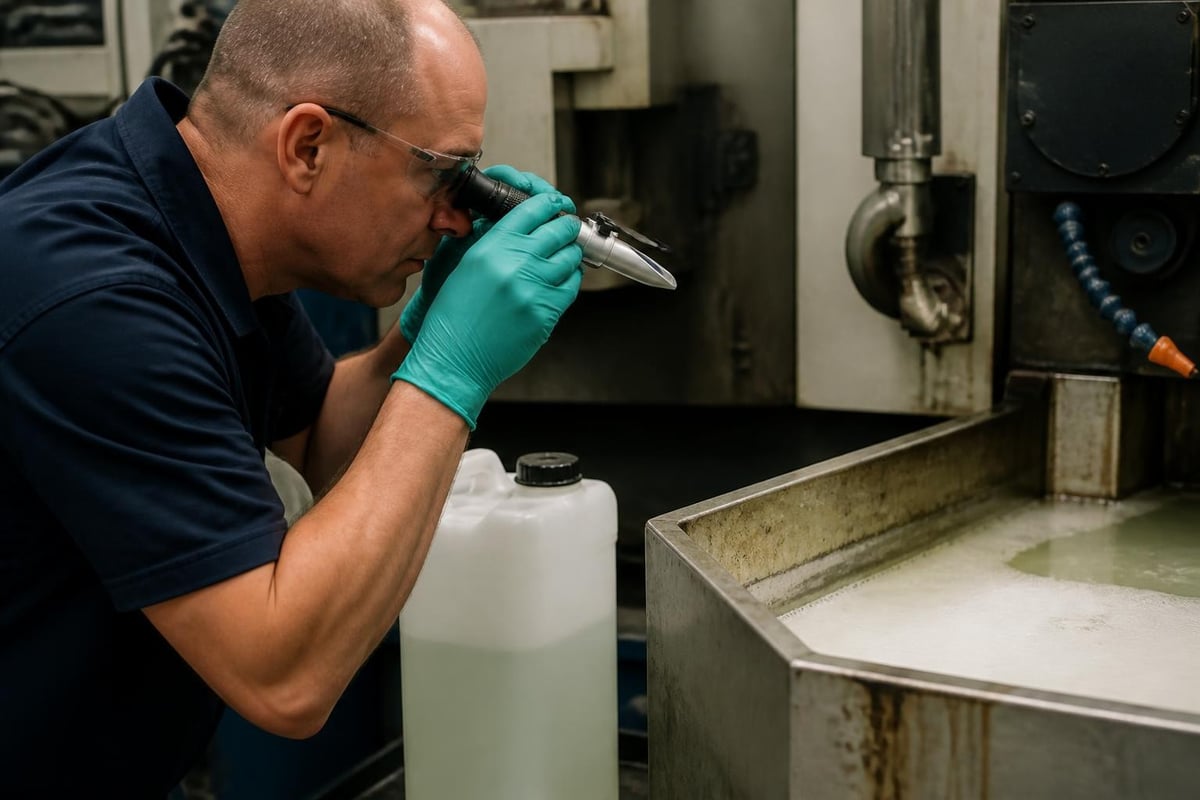
Refractometer testing provides the most reliable concentration measurement method for production environments. These handheld devices measure the refractive index of diluted fluids, correlating readings to concentration percentages using manufacturer-specific conversion factors. Daily monitoring enables timely adjustments before performance degradation occurs.
Key Concentration Guidelines
Grinding operations: 3-6% for synthetic fluids, 5-8% for semi-synthetics
General machining: 5-10% depending on material and severity
Heavy-duty cutting: 8-15% for demanding applications
Aluminum processing: 5-8% with non-staining formulations
Temperature control directly affects metalworking fluid performance and longevity. Ideal operating temperatures range from 65-85°F (18-29°C), with sustained temperatures above 95°F (35°C) accelerating bacterial growth and chemical degradation. Centralized coolant systems should incorporate heat exchangers or chillers when machining speeds generate excessive thermal loads.
Health and Safety Considerations
OSHA provides comprehensive guidance on managing health risks associated with metalworking fluid exposure. Dermatitis represents the most common occupational health issue, resulting from prolonged skin contact with contaminated or improperly maintained fluids. Respiratory concerns arise from mist generation during high-speed machining, potentially exposing workers to aerosolized bacteria, fungi, and chemical irritants.
Implementing effective exposure control requires a multi-layered approach. Engineering controls such as machine enclosures, mist collectors, and proper ventilation systems minimize airborne contamination. Administrative controls including job rotation, proper training, and regular health monitoring protect worker wellbeing. Personal protective equipment provides the final defense layer, with cut-resistant gloves, safety glasses, and protective clothing preventing direct fluid contact.
Exposure evaluation methods outlined by OSHA help manufacturers assess air quality and identify improvement opportunities. Regular air sampling for particulates and microorganisms enables data-driven decisions about ventilation adequacy and fluid maintenance practices. Understanding applicable standards ensures compliance while protecting employee health.
Biological Contamination Control Strategies
Water-based metalworking fluids create ideal conditions for microbial growth, with bacteria and fungi thriving in the nutrient-rich environment. Bacterial contamination manifests as foul odors, pH decline, emulsion instability, and increased corrosion rates. Fungal growth appears as floating mats or stringy masses that clog filters and contaminate machined surfaces.
Preventive maintenance significantly reduces biological problems compared to reactive treatments. Maintaining proper concentration, removing tramp oils promptly, and cleaning sumps regularly eliminate conditions that promote microbial proliferation. Weekend shutdown periods deserve special attention, as stagnant fluids enable rapid bacterial multiplication that overwhelms biocide reserves.
Effective Biological Control Measures:
Monitor and adjust pH weekly (target 8.8-9.2 for most systems)
Remove floating oils using skimmers or coalescers
Clean machine sumps and remove settled solids quarterly
Ensure adequate fluid circulation during non-production hours
Apply biocides according to manufacturer protocols when needed
The OSHA best practices manual emphasizes that prevention through proper maintenance proves more cost-effective than treating contaminated systems. Establishing standardized cleaning schedules and empowering operators to identify early warning signs creates a proactive maintenance culture.
Extending Fluid Service Life Through Filtration
Filtration systems remove contaminants that accelerate metalworking fluid degradation and compromise machining quality. Metal fines, dirt particles, and tramp oil accumulation reduce fluid effectiveness while increasing maintenance requirements. Well-designed filtration extends service life by 200-400%, delivering substantial cost savings and environmental benefits.
Cartridge filters with ratings between 10-50 microns handle most general machining applications, balancing filtration efficiency with reasonable flow rates. Magnetic separators excel at removing ferrous fines from grinding and turning operations, preventing particle recirculation. Centrifugal separators extract both fine particles and tramp oils, making them ideal for high-production environments with multiple contamination sources.
Filtration Method | Primary Application | Particle Size Removed | Maintenance Requirement |
Cartridge filters | General machining | 10-50 microns | Replace when clogged |
Magnetic separators | Ferrous metal work | Ferrous fines only | Clean periodically |
Paper bed filters | Grinding operations | 5-20 microns | Replace media regularly |
Centrifuges | High-volume systems | <5 microns + oils | Minimal maintenance |
Implementing hazard control solutions requires matching filtration capacity to machining demands. Undersized systems struggle to maintain fluid cleanliness during peak production, while oversized equipment wastes capital and operating costs. Calculating proper sizing involves assessing machine tool sump volumes, chip load generation rates, and acceptable contamination levels.
Formulation Technology and Custom Solutions
Advanced metalworking fluids leverage sophisticated additive technology to meet increasingly demanding performance requirements. Manufacturers developing their own formulations or seeking customized solutions benefit from working with experienced additive suppliers who understand the complex interactions between base fluids, emulsifiers, corrosion inhibitors, and performance additives.
For companies formulating their own cutting fluids, metalworking fluid additive packages provide concentrated blends of essential performance additives designed for easy incorporation into finished products. These packages eliminate the complexity of sourcing and balancing individual components while ensuring consistent quality and performance characteristics.
Modern formulation challenges include balancing aggressive machining performance with environmental compliance, operator safety, and equipment compatibility. Chlorine-free EP additives maintain cutting performance while meeting European environmental standards. Low-foam emulsifier systems accommodate high-pressure coolant delivery in advanced machining centers. Broad-spectrum biocide packages control biological contamination without leaving harmful residues or creating disposal complications.
Monitoring and Testing Protocols
Systematic testing programs identify developing problems before they impact production quality or tool performance. Beyond basic concentration and pH measurements, comprehensive monitoring includes bacterial counts, foam tendency, emulsion stability, and corrosion protection verification. Establishing baseline data when introducing new fluids enables meaningful trend analysis over time.
Essential Testing Parameters:
Concentration: Daily refractometer readings
pH level: Weekly testing (target range 8.5-9.5)
Bacterial count: Weekly or bi-weekly sampling
Tramp oil content: Weekly visual assessment
Foam height: Weekly measurement during operation
Corrosion protection: Monthly chip test evaluation
Recent technological advances enable real-time fluid monitoring through integrated sensors that continuously track concentration, temperature, and contamination levels. Research into portable measurement systems demonstrates growing capabilities for in-situ oil concentration analysis, helping manufacturers optimize fluid management without laboratory delays.
Test result interpretation requires understanding acceptable ranges for each parameter. Bacterial counts below 10^6 colony-forming units per milliliter generally indicate satisfactory biological control, while levels exceeding 10^7 signal immediate intervention needs. Foam heights above three inches suggest depletion of anti-foam additives or contamination with incompatible materials such as hydraulic oils or way lubricants.
Disposal and Environmental Responsibility
Spent metalworking fluid disposal represents a significant cost and environmental consideration for manufacturing facilities. Regulations classify most used fluids as hazardous waste due to heavy metal content from machined materials, requiring proper handling, storage, and disposal through licensed waste management contractors. Treatment costs typically range from $0.50-2.00 per gallon depending on contamination levels and local regulations.
Extending fluid service life through proper maintenance delivers both economic and environmental benefits. High-quality metalworking fluids maintained according to manufacturer recommendations often achieve 12-18 month service intervals in typical machining operations, compared to 3-6 months for poorly managed systems. This longevity reduces fresh fluid consumption, waste generation, and disposal expenses while maintaining consistent machining performance.
Some facilities implement on-site treatment systems that separate oil, water, and solids for individual disposal or recycling. Ultrafiltration membranes remove oils and fine particles, producing water clean enough for discharge or reuse. Vacuum evaporation systems concentrate contaminants, reducing disposal volumes by 90% or more. These capital-intensive solutions prove cost-effective only for high-volume operations generating thousands of gallons of waste annually.
Selecting biodegradable base stocks and environmentally preferred additives simplifies disposal and reduces regulatory burden. Comprehensive product offerings now include formulations specifically designed for reduced environmental impact without compromising machining performance. These eco-friendly options appeal to manufacturers pursuing sustainability certifications or operating under stringent environmental regulations.
System Design and Coolant Delivery Optimization
Effective coolant delivery maximizes the benefits of premium metalworking fluids while minimizing consumption. Traditional flood cooling delivers high volumes at relatively low pressure, providing excellent chip flushing and general cooling. High-pressure coolant systems (1000-3000 PSI) direct smaller volumes precisely at the cutting zone, improving chip breaking and enabling higher cutting speeds in difficult materials.
Minimum quantity lubrication (MQL) systems atomize tiny amounts of neat cutting oil, delivering lubrication with minimal fluid consumption. This approach suits environmentally sensitive operations and reduces cleanup requirements, though it provides limited cooling compared to flood systems. Through-tool coolant delivery channels fluid directly through hollow cutting tools, maximizing effectiveness in deep hole drilling and internal threading operations.
Coolant Delivery System Comparison
System Type | Flow Rate | Pressure Range | Best Applications | Environmental Impact |
Flood cooling | 5-20 GPM | 50-150 PSI | General machining | High fluid consumption |
High-pressure | 1-5 GPM | 1000-3000 PSI | Difficult materials | Moderate consumption |
MQL systems | <0.1 GPM | 70-100 PSI | Light operations | Minimal waste |
Through-tool | 2-8 GPM | 300-1000 PSI | Drilling, boring | Moderate consumption |
Centralized coolant systems serving multiple machines offer economies of scale in filtration, temperature control, and concentration management. These installations require careful design to maintain proper flow rates and pressure at each machine while minimizing cross-contamination between incompatible operations. Individual machine sumps provide operational flexibility and prevent system-wide contamination but demand more intensive maintenance attention.
Troubleshooting Common Performance Issues
Machining operations occasionally experience fluid-related problems that impact quality, productivity, or equipment condition. Systematic troubleshooting identifies root causes and implements effective corrective actions. Poor surface finish often indicates inadequate lubrication from low concentration, biological contamination, or improper fluid selection for the material being machined. Tool wear acceleration suggests insufficient EP protection, while excessive foam points to contamination or depleted anti-foam additives.
Corrosion on machined parts or machine surfaces reveals inadequate rust protection from low concentration, pH decline, or biological activity consuming corrosion inhibitors. Skin irritation complaints typically stem from bacterial contamination, excessive concentration, or tramp oil accumulation. Addressing these issues requires testing to confirm the specific cause before implementing corrections.
Common Issues and Solutions:
Rancid odor: Indicates bacterial overgrowth; increase concentration, apply biocide, clean system
Oil separation: Points to emulsion breakdown; verify concentration, check for hard water, replace fluid if necessary
Excessive foam: Remove tramp oil contamination, verify proper concentration, add anti-foam as needed
Rapid pH decline: Suggests bacterial activity or CO2 absorption; treat biologically, adjust concentration
Machine staining: Wrong fluid chemistry for material; switch to appropriate formulation
Many performance issues trace back to inconsistent maintenance practices or operator error in concentration management. Establishing clear standard operating procedures, providing thorough training, and implementing regular audits prevents recurring problems. Documentation of test results and corrective actions builds institutional knowledge that improves long-term fluid management effectiveness.
Integration with Advanced Manufacturing Technologies
Modern machining centers equipped with high-speed spindles, five-axis capabilities, and automated tool changers demand metalworking fluids engineered for these demanding conditions. Spindle speeds exceeding 20,000 RPM generate significant heat and mist, requiring fluids with excellent cooling properties and low mist generation characteristics. Automated production lines need consistent fluid properties that maintain performance through extended unmanned operation periods.
Manufacturers pursuing Industry 4.0 integration increasingly incorporate fluid management into their digital monitoring ecosystems. Sensor networks track concentration, temperature, contamination, and consumption rates in real-time, feeding data to centralized management systems. Predictive algorithms identify developing problems and trigger automated corrective actions such as concentration adjustment or biocide dosing before performance degradation occurs.
Additive manufacturing and hybrid machining technologies introduce new fluid performance requirements. Metal 3D printing post-processing often involves CNC machining of printed components with unique metallurgical characteristics. These applications benefit from specialized formulations that address the distinct properties of additively manufactured materials while maintaining compatibility with conventional machining operations on the same equipment.
Cost Analysis and Total Ownership Considerations
Evaluating metalworking fluid costs requires looking beyond initial purchase price to total cost of ownership across the product lifecycle. Premium fluids commanding higher unit costs often deliver superior service life, reduced tool wear, improved surface quality, and lower disposal expenses that result in lower total costs. Comprehensive cost analysis should consider fluid consumption, concentrate usage, disposal fees, tool replacement, rework rates, and maintenance labor.
Tool life extension represents one of the most significant value drivers for quality metalworking fluids. Cutting tools account for 2-4% of total manufacturing costs in typical operations, with potential savings from 20-30% tool life improvement easily justifying premium fluid costs. Surface finish improvements reduce or eliminate secondary operations such as grinding or polishing, delivering labor savings and faster throughput.
Longer fluid service intervals reduce the frequency of costly system cleanouts and fluid replacement procedures that take production equipment offline. A machining center generating $200 per hour in contribution margin loses $1,600 during an eight-hour fluid change. Extending change intervals from six months to twelve months eliminates one downtime event annually, delivering measurable productivity benefits beyond direct fluid cost savings.
Partnering with experienced suppliers offering technical support, regular testing services, and application optimization assistance adds substantial value beyond the fluid itself. These services help manufacturers maximize performance, troubleshoot problems quickly, and adapt to changing production requirements. Companies like Guangzhou Rolitom Lubricant Technology provide comprehensive technical resources supporting optimal fluid selection and management practices.
Successful metalworking fluid management combines proper product selection, systematic maintenance, and comprehensive operator training to optimize machining performance while controlling costs and protecting worker health. The diverse range of fluid types, additives, and delivery systems enables manufacturers to match solutions precisely to their specific operational requirements. With over 20 years of experience in developing high-performance metalworking fluids and additive packages, Guangzhou Rolitom Lubricant Technology CO.,LTD provides the technical expertise and product solutions manufacturers need to achieve excellence in metal cutting and forming operations.
Contact: LilyLu
Phone: +86 138 2603 0637
E-mail: lilylu@rolitom.com
Whatsapp:+8613826030637
Add: Room 426, No.1218 Zhongshan Avenue Middle, Tianhe District, Guangzhou City,China
We chat