Modern metalworking operations depend on effective cooling and lubrication systems to achieve precision cuts, extend tool life, and maintain consistent surface quality. water soluble cutting coolant has become the preferred choice for manufacturers across automotive, aerospace, and general machining industries due to its superior heat dissipation properties, cost-effectiveness, and environmental advantages compared to straight cutting oils. Understanding the formulation, application methods, and maintenance requirements of these fluids enables machining shops to optimize productivity while controlling operational costs. This comprehensive guide examines the technical characteristics, selection criteria, and best practices for implementing water soluble cutting coolant systems in industrial metalworking environments.
Understanding Water Soluble Cutting Coolant Chemistry
Water soluble cutting coolant represents a broad category of MetalWorking Fluids designed to be diluted with water before use in machining operations. These concentrates contain carefully balanced additive packages that provide lubrication, corrosion protection, microbial stability, and emulsion formation when mixed with water at recommended ratios.
The chemistry behind water soluble cutting coolant typically falls into three primary categories: soluble oils (emulsifiable oils), semi-synthetic fluids, and fully synthetic fluids. Each type offers distinct advantages depending on the machining operation, metal being cut, and workshop requirements. Soluble oils contain 60-90% mineral oil with emulsifiers that create milky emulsions when diluted, providing excellent lubricity for heavy-duty operations.
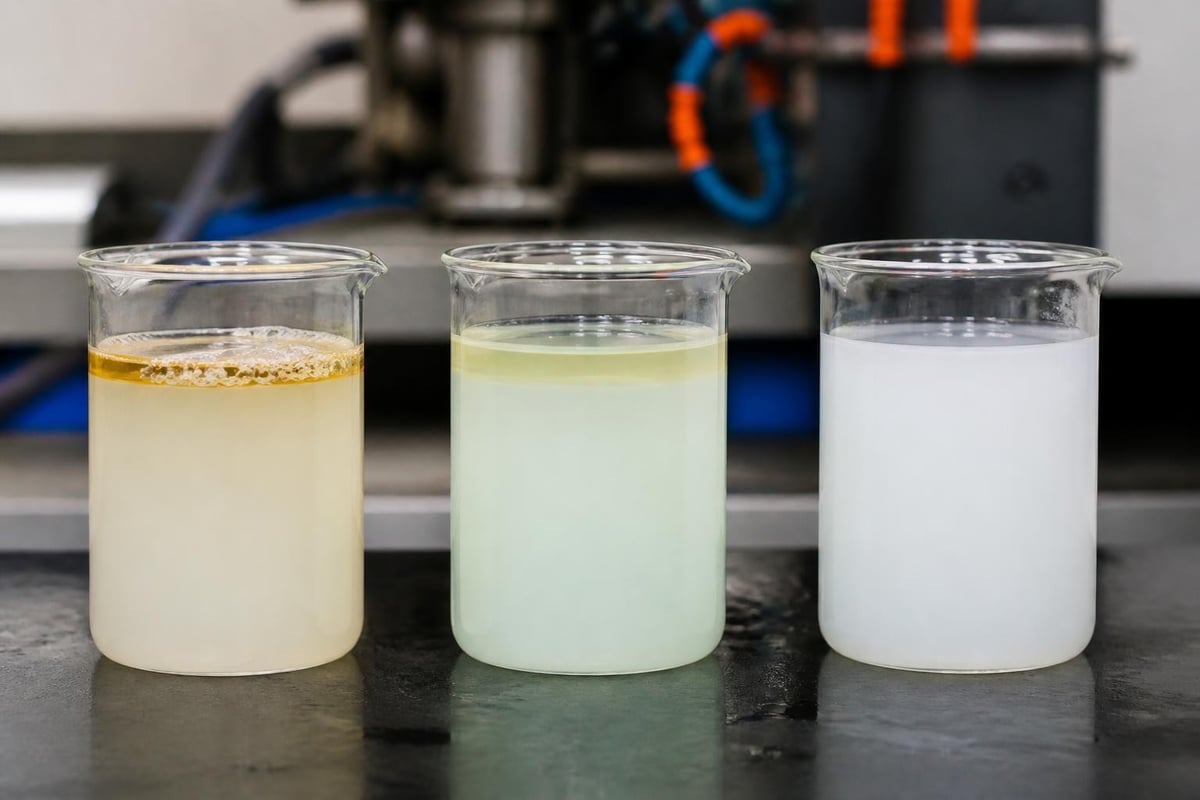
Semi-synthetic fluids bridge the gap between traditional soluble oils and fully synthetic products. These formulations typically contain 5-50% mineral oil combined with synthetic additives, creating translucent emulsions that offer balanced lubrication and cooling performance. Fully synthetic coolants eliminate petroleum oil entirely, relying on synthetic polymers, corrosion inhibitors, and extreme pressure additives dissolved in water to deliver superior cooling capacity and extended sump life.
Key Performance Characteristics
Effective water soluble cutting coolant must satisfy multiple functional requirements simultaneously. Cooling capacity stands as the primary function, as machining operations generate substantial heat that can damage both the workpiece and cutting tools. Water's high specific heat capacity makes water-based coolants dramatically more effective at heat removal compared to straight oils.
Essential performance attributes include:
Exceptional cooling efficiency through rapid heat transfer
Adequate boundary lubrication at tool-chip interface
Corrosion protection for ferrous and non-ferrous metals
Stable emulsion formation across varying water hardness levels
Resistance to bacterial and fungal contamination
Low foam generation during high-pressure application
Compatibility with multiple metal alloys
The biological stability of water-based cutting fluids significantly impacts operational costs and worker health. Quality formulations incorporate biocides and pH buffers that suppress microbial growth without compromising environmental compliance or skin compatibility.
Application Methods and Dilution Management
Proper dilution represents the foundation of successful water soluble cutting coolant performance. Most concentrates require mixing at ratios between 3-10% for general machining, though specific operations may demand adjustments outside this range. Heavy-duty operations like broaching or gear hobbing typically require richer concentrations (8-10%) to provide adequate lubrication, while light grinding operations perform well at leaner ratios (3-5%).
Water quality dramatically influences coolant stability and performance. Hard water containing high concentrations of calcium and magnesium can destabilize emulsions, promote scale formation, and reduce corrosion protection. Many industrial facilities implement water softening systems or use deionized water for coolant preparation, particularly when working with precision components that cannot tolerate any surface staining.
Machining Operation | Recommended Concentration | Primary Requirement |
High-speed milling | 4-6% | Cooling and chip evacuation |
Turning operations | 5-8% | Balanced cooling and lubrication |
Grinding | 3-5% | Maximum cooling, minimal residue |
Broaching/tapping | 8-10% | Extreme pressure lubrication |
Aluminum machining | 4-6% | Non-staining, corrosion control |
The mixing sequence matters considerably when preparing water soluble cutting coolant. Always add concentrate to water, never water to concentrate, to ensure proper emulsion formation and prevent localized overconcentration. Agitation during mixing helps distribute emulsifiers evenly and creates stable, homogenous coolant ready for immediate use.
Metal-Specific Formulation Considerations
Different metal alloys present unique challenges that require tailored water soluble cutting coolant formulations. Ferrous metals including carbon steel, alloy steel, and cast iron generally tolerate a wide range of coolant types, though cast iron's tendency to generate fine particles demands formulations with excellent settling characteristics and filtration compatibility.
Aluminum and aluminum alloys require specialized attention due to their reactivity with certain additives. Alkaline coolants can cause staining or even corrosion on aluminum surfaces, necessitating pH-neutral or slightly alkaline formulations with aluminum-specific corrosion inhibitors. Modern metalworking fluid manufacturers develop dedicated aluminum machining coolants that prevent surface discoloration while maintaining effective cooling.
Stainless Steel and Exotic Alloys
Stainless steel machining generates significantly more heat than carbon steel due to work hardening characteristics and lower thermal conductivity. Water soluble cutting coolant for stainless steel must provide aggressive cooling while delivering enhanced extreme pressure lubrication to reduce built-up edge formation. Chlorine-free EP additives have become standard in modern formulations due to environmental regulations and workplace safety concerns.
Titanium, Inconel, and other exotic alloys demand premium water soluble cutting coolant with advanced additive packages. These materials' combination of high strength, low thermal conductivity, and chemical reactivity requires coolants that maintain stability at elevated temperatures while providing boundary lubrication under extreme pressure conditions.
Copper and brass machining introduces additional complexity because many biocides attack copper alloys, leading to surface discoloration and dimensional changes. Specialized formulations eliminate copper-aggressive additives while incorporating copper corrosion inhibitors like triazole derivatives. Recent research on coolant usage highlights the importance of selecting metal-compatible formulations to prevent costly workpiece rejection.
Performance Benefits in Industrial Operations
Implementing properly selected water soluble cutting coolant delivers measurable improvements across multiple operational metrics. Tool life extension typically ranges from 20-50% compared to inadequate or incorrect coolant selection, translating directly to reduced tooling costs and less frequent tool changes that interrupt production.
Surface finish quality improves substantially with optimized coolant application. Effective cooling prevents thermal expansion during cutting, while adequate lubrication minimizes friction-induced roughness. Precision machining operations producing components with tight tolerances depend on consistent coolant performance to maintain dimensional accuracy throughout production runs.
Operational advantages include:
Extended cutting tool service life through reduced wear
Improved surface finish quality on machined components
Higher cutting speeds and feed rates enabling increased productivity
Reduced energy consumption through efficient heat removal
Lower overall fluid consumption compared to straight oils
Simplified waste treatment and environmental compliance
Enhanced workplace safety with reduced mist and fume generation
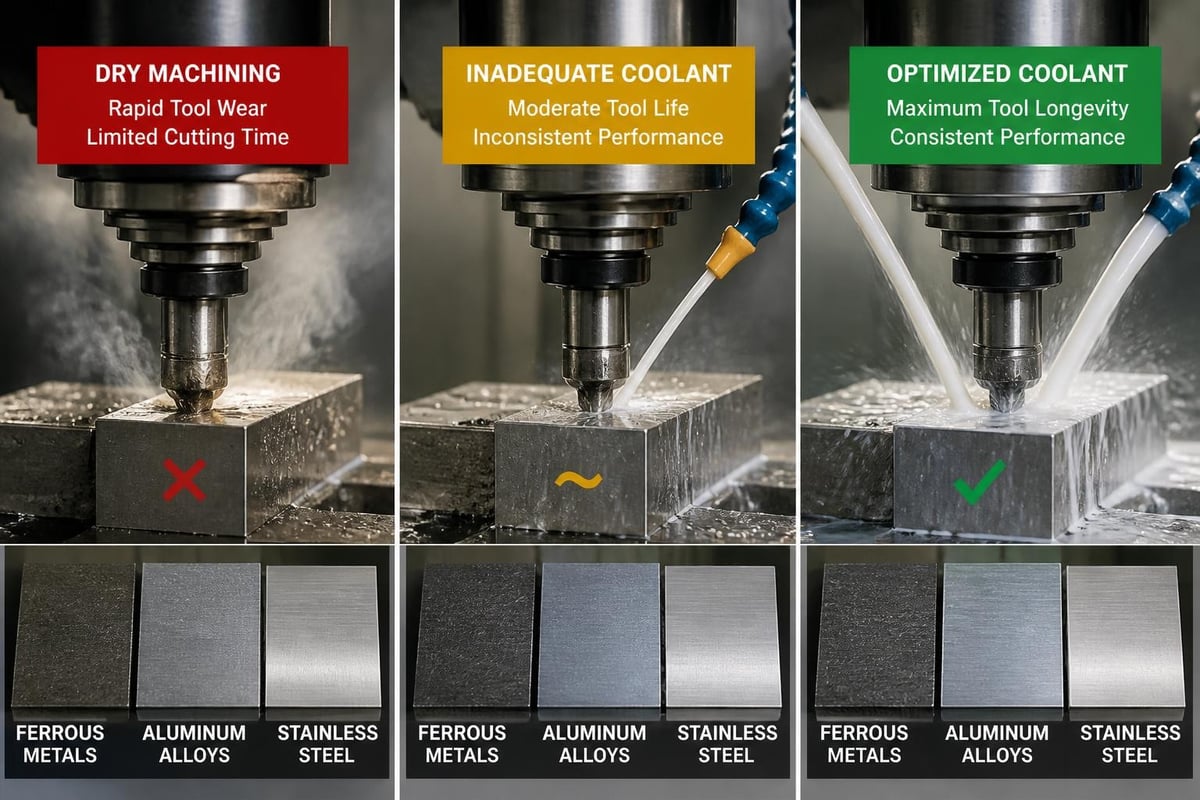
Machining efficiency gains result from higher cutting parameters made possible by superior cooling. Operations that previously required conservative speeds to prevent tool failure can safely increase metal removal rates when supported by appropriate water soluble cutting coolant systems. This productivity improvement often justifies premium fluid costs through reduced cycle times.
Maintenance and Sump Management Protocols
Successful water soluble cutting coolant programs require systematic maintenance to preserve fluid performance and extend service life. Regular monitoring of concentration, pH, contamination levels, and microbial activity prevents gradual degradation that compromises both fluid effectiveness and machined part quality.
Concentration monitoring should occur daily using refractometers calibrated for the specific coolant type in use. Most water soluble cutting coolant maintains optimal performance within narrow concentration ranges, and evaporative water loss steadily increases concentration over time. Topping up with diluted coolant (not straight water) maintains target concentration while replenishing depleted additives.
pH Control and Biological Management
pH serves as a critical indicator of coolant health and biological stability. Fresh water soluble cutting coolant typically exhibits pH between 8.5-9.5, creating an environment that inhibits bacterial growth while providing corrosion protection. pH below 8.0 signals bacterial contamination or additive depletion, while readings above 10.0 may indicate concentrate overfeeding or water evaporation.
Bacterial and fungal contamination represents the primary cause of premature coolant failure. Microorganisms consume fluid components, generate foul odors, reduce corrosion protection, and create health hazards for machine operators. For facilities requiring enhanced corrosion protection in their metalworking systems, Emulsified Oil Package 230P delivers stable emulsion performance with outstanding rust resistance and low foam characteristics, optimized for machining die steel, cast iron, stainless steel and carbon steel.
Maintenance Task | Frequency | Target Range |
Concentration check | Daily | ±0.5% of target |
pH measurement | Daily | 8.5-9.5 |
Odor assessment | Daily | Fresh/mild |
Tramp oil removal | Weekly | <5% by volume |
Bacteria count | Monthly | <10⁶ CFU/ml |
Complete fluid change | 6-12 months | N/A |
Tramp oil contamination from machine way lubes, hydraulic leaks, and slideway oils degrades water soluble cutting coolant performance and promotes bacterial growth. Skimming, coalescers, or centrifugal separators remove floating tramp oil before it emulsifies into the coolant. Many modern facilities implement continuous oil separation systems that automatically remove contaminants.
Environmental and Safety Considerations
Water soluble cutting coolant offers significant environmental advantages compared to straight cutting oils. Reduced oil content means lower volatile organic compound (VOC) emissions, simplified waste treatment, and decreased fire hazard in machining environments. Modern formulations eliminate or minimize toxic heavy metals, chlorinated additives, and other substances of environmental concern.
Workplace safety improvements include reduced mist generation during high-speed machining operations. While all metalworking fluids can generate airborne particles, water-soluble coolants produce less respiratory irritation than oil-based products when proper mist collection systems are employed. Skin contact safety depends on formulation pH, biocide selection, and individual operator sensitivity.
Disposal regulations for spent water soluble cutting coolant vary by jurisdiction but generally require pH neutralization, oil separation, and sometimes biological treatment before discharge to municipal wastewater systems. Many industrial facilities partner with specialized waste management companies that recycle coolant components or process waste fluids in compliance with environmental regulations.
Selecting Sustainable Formulations
Sustainability-focused manufacturers increasingly demand water soluble cutting coolant formulations that minimize environmental impact throughout the product lifecycle. Biodegradable base stocks, renewable raw materials, and reduced packaging waste represent key selection criteria for environmentally conscious operations.
Extended sump life directly correlates with reduced environmental impact by decreasing fluid consumption and waste generation. Premium water soluble cutting coolant formulations incorporating advanced biocides, corrosion inhibitors, and pH buffers can operate effectively for 12-18 months with proper maintenance, compared to 6-9 months for economy products. The higher initial cost per gallon becomes economically favorable when total lifecycle costs are calculated.
Advanced Formulation Technologies
Modern water soluble cutting coolant development leverages sophisticated additive chemistry to meet increasingly demanding machining requirements. Extreme pressure (EP) and anti-wear (AW) additives provide boundary lubrication when fluid films break down under high contact pressures at the tool-chip interface. Traditional chlorinated and sulfurized EP additives face regulatory pressure, driving development of alternative chemistries including phosphorus compounds and synthetic esters.
Emulsion stability across varying water hardness conditions requires carefully selected emulsifier packages that function effectively in both soft and hard water. Anionic, nonionic, and amphoteric surfactants are blended to create robust emulsions resistant to mechanical shear, thermal stress, and water quality fluctuations common in industrial environments.
Corrosion inhibitor technology has advanced significantly to protect multiple metal types simultaneously. Water soluble cutting coolant must prevent rust on ferrous components while avoiding staining or etching aluminum, copper, brass, and other non-ferrous metals. Modern formulations employ synergistic inhibitor combinations including triazoles, carboxylic acids, and phosphate esters that provide broad-spectrum protection.
Advanced additive technologies include:
Nano-particle lubricant additives for enhanced boundary lubrication
Synthetic ester base stocks offering biodegradability and performance
Boron-free extreme pressure additives for environmental compliance
Polymer-based emulsifiers providing superior hard water stability
Multi-functional corrosion inhibitors protecting diverse metal alloys
Manufacturers seeking to develop customized formulations can source metalworking fluid additive packages that simplify the blending process while ensuring performance consistency. These concentrated additive systems allow formulators to create tailored solutions matching specific operational requirements.
Troubleshooting Common Coolant Issues
Even well-maintained water soluble cutting coolant systems occasionally develop problems requiring corrective action. Recognizing symptoms and implementing appropriate solutions prevents minor issues from escalating into costly fluid replacement or production disruptions.
Foam formation during machining operations typically results from excessive coolant concentration, high flow rates, or soft water conditions. Reducing concentration slightly, adding defoamer supplements, or adjusting coolant delivery pressure usually resolves foaming without compromising cooling performance. Persistent foam despite these adjustments may indicate incompatible coolant and machine components.
Addressing Emulsion Instability
Emulsion splitting, where oil and water separate into distinct layers, signals serious coolant degradation. Common causes include bacterial contamination, extreme hard water, excessive tramp oil, or expired fluid past its useful service life. Testing pH and bacteria levels identifies biological contamination, while water analysis reveals hardness issues. Severe emulsion instability generally requires complete fluid change rather than attempted rehabilitation.
Odor problems develop when bacterial populations multiply beyond sustainable levels, metabolizing coolant components and generating hydrogen sulfide or other malodorous compounds. High-performance water-based cutting fluids incorporate biocide packages that suppress bacterial growth, but poor sump hygiene or inadequate concentration control can overwhelm these protective systems.
Rust or staining on machined components indicates inadequate corrosion protection from depleted inhibitors, incorrect concentration, or metal-incompatible formulations. Immediate concentration adjustment and pH verification address many corrosion issues, though persistent problems may require fluid replacement with formulations better matched to the metals being machined.
Cost Optimization Strategies
Effective water soluble cutting coolant management balances fluid performance requirements against total ownership costs. While premium concentrates command higher purchase prices, their extended service life, reduced tool wear, and improved productivity often deliver lower overall costs than economy products requiring frequent replacement.
Concentration control represents the single most impactful cost management practice. Operating at excessive concentration wastes expensive concentrate without proportional performance benefits, while lean concentration compromises tool life and corrosion protection. Automated concentration monitoring and dosing systems maintain optimal levels while minimizing product waste.
Cost Factor | Economy Coolant | Premium Coolant |
Purchase price/gallon | Lower | Higher |
Typical dilution ratio | 5-8% | 4-6% |
Service life (months) | 6-9 | 12-18 |
Tool life extension | Baseline | +20-30% |
Maintenance frequency | Higher | Lower |
Total cost/year | Higher | Lower |
Centralized coolant systems serving multiple machines reduce overall fluid inventory and simplify maintenance compared to individual machine sumps. Large central systems benefit from economies of scale in filtration, temperature control, and contamination removal. However, they also risk widespread contamination if problems occur, making redundant monitoring critical.
Partnerships with experienced lubricant technology specialists provide access to technical support, formulation optimization, and predictive maintenance programs that maximize coolant system performance. Regular fluid analysis, onsite testing, and application engineering consultation identify opportunities for efficiency improvements and cost reduction.
Future Developments in Coolant Technology
Water soluble cutting coolant formulation continues evolving to address emerging machining challenges, environmental regulations, and performance expectations. Development priorities include sustainable raw materials, enhanced biodegradability, reduced human health impacts, and compatibility with advanced manufacturing technologies.
Minimum quantity lubrication (MQL) and near-dry machining techniques reduce overall fluid consumption but require specialized coolant formulations optimized for micro-dosing application. These next-generation products deliver concentrated lubrication with minimal cooling fluid, supporting sustainability initiatives while maintaining machining performance.
Smart manufacturing integration enables real-time coolant monitoring through sensors measuring concentration, pH, temperature, and contamination continuously. Predictive analytics identify degradation trends before performance suffers, triggering automated corrective actions or maintenance alerts. This data-driven approach optimizes fluid life while preventing quality issues.
Regulatory pressure on specific chemical additives drives ongoing reformulation efforts. Alternatives to traditional biocides, boron compounds, and other substances of concern require extensive testing to ensure equivalent performance. Successful next-generation formulations maintain effectiveness while satisfying increasingly stringent environmental and safety standards.
Selecting and maintaining appropriate water soluble cutting coolant directly impacts machining efficiency, product quality, and operational costs across metalworking operations. Understanding formulation chemistry, application requirements, and maintenance protocols enables manufacturers to optimize coolant system performance. With over 20 years of experience developing industrial lubrication solutions, Guangzhou Rolitom Lubricant Technology CO.,LTD offers comprehensive metalworking fluid products and technical support to help manufacturers achieve superior machining results while controlling costs.
Contact: LilyLu
Phone: +86 138 2603 0637
E-mail: lilylu@rolitom.com
Whatsapp:+8613826030637
Add: Room 426, No.1218 Zhongshan Avenue Middle, Tianhe District, Guangzhou City,China
We chat