The modern manufacturing landscape demands precision, efficiency, and reliability at every step of production. Behind countless metalworking operations, die casting facilities, and precision manufacturing processes stands a critical partner: the industrial lubricant co that formulates, tests, and delivers specialized fluid solutions. These companies bridge the gap between chemical science and practical workshop challenges, transforming base oils and additives into high-performance products that protect equipment, extend tool life, and improve surface finishes across diverse applications.
Understanding the Industrial Lubricant Co Business Model
An industrial lubricant co operates at the intersection of chemistry, engineering, and manufacturing logistics. Unlike consumer lubricant brands, these specialized companies focus exclusively on B2B relationships, developing products for specific industrial processes rather than general-purpose applications.
The core business model centers on three pillars: research and development, production capabilities, and technical sales support. R&D teams work with Lubricant Additive Packages to create formulations that meet evolving industry standards, address new metallurgical challenges, and comply with environmental regulations. Production facilities must maintain strict quality controls, often certified to ISO 9001 and other international standards that industrial buyers require.
Key Operational Components
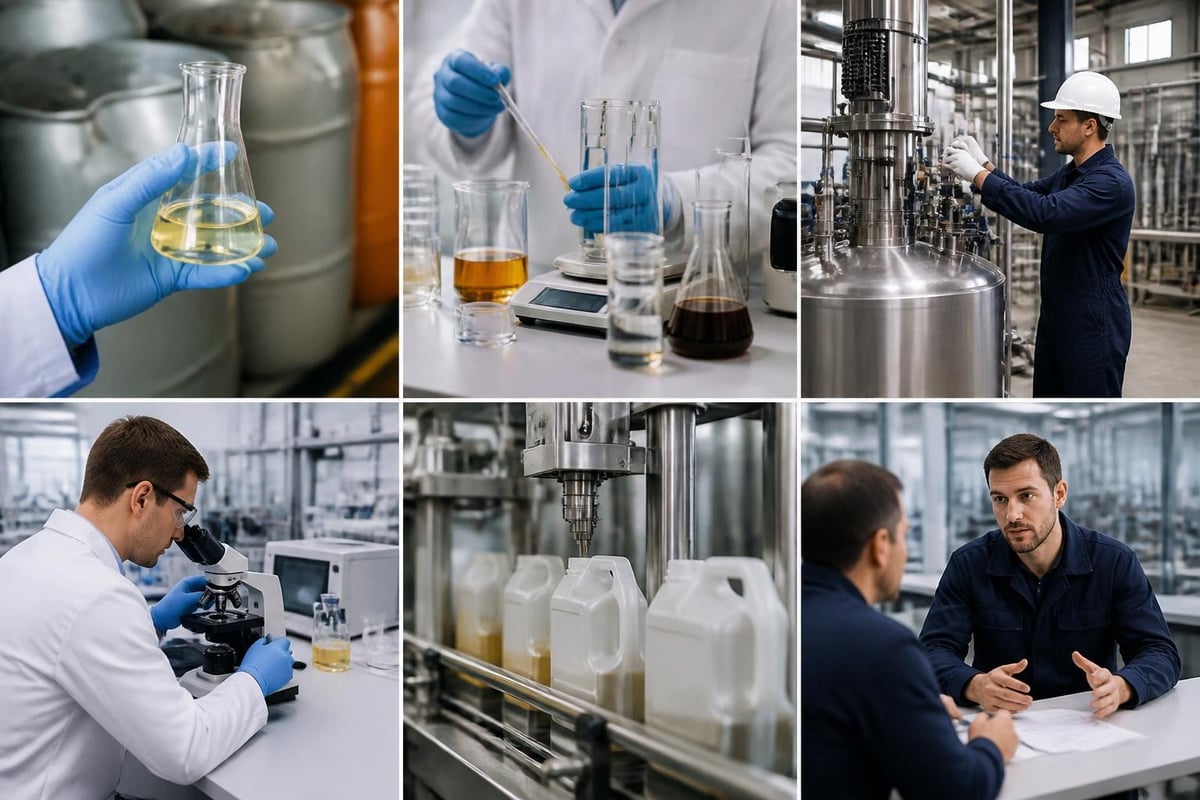
Technical formulation laboratories for testing base oil compatibility and additive performance
Pilot production lines that validate scalability before full manufacturing
Quality assurance protocols including viscosity testing, emulsion stability analysis, and corrosion resistance evaluation
Customer application support teams that troubleshoot on-site performance issues
Supply chain management for sourcing specialized additives and base stocks
The industrial lubricant co must also navigate complex regulatory landscapes. ASTM International petroleum and lubricant standards provide essential frameworks for product classification, testing methodologies, and performance benchmarks that manufacturers worldwide rely upon.
 Metalworking Fluid Formulation and Manufacturing
Metalworking represents the largest market segment for most industrial lubricant co operations. The global industrial lubricants market continues expanding, driven by automotive manufacturing, aerospace machining, and precision parts production that demand increasingly sophisticated fluid formulations.
Soluble and Semi-Synthetic Fluids
These water-dilutable products require precise additive packages to maintain stable emulsions across varying water hardness levels. An industrial lubricant co must balance multiple performance criteria simultaneously: cooling efficiency, lubrication at the tool-chip interface, rust protection during inter-operation storage, and foam control during high-pressure application.
The Emulsified Oil Package 230P exemplifies how specialized additive packages address these complex requirements. Matched specifically with 150SN base oil, this formulation delivers stable emulsion characteristics essential for machining die steel, cast iron, stainless steel, and carbon steel-the core materials in most metal fabrication shops.
Fluid Type | Oil Content | Primary Applications | Key Advantages |
Soluble Oils | 60-85% | General machining, grinding | High lubricity, cost-effective |
Semi-Synthetic | 5-40% | Precision grinding, milling | Balanced cooling and lubrication |
Fully Synthetic | 0% | High-speed grinding, aluminum work | Superior cooling, cleanliness |
Additive Package Selection Criteria
The industrial lubricant co must source or develop additive packages that deliver specific performance attributes. Extreme pressure (EP) agents protect tooling under high loads, while corrosion inhibitors prevent rust formation on freshly machined surfaces. Biocides control bacterial growth in sumps, and defoamers prevent foam accumulation that reduces cooling efficiency.
Recent research on environmentally acceptable lubricant blends demonstrates how synthetic esters and low-viscosity polyalphaolefins can be optimized through careful additive selection, offering industrial lubricant co operations pathways to more sustainable product portfolios without sacrificing performance.
Rust Prevention Product Development
Corrosion protection represents another critical focus area for the industrial lubricant co. Manufacturing facilities require reliable rust prevention during multiple stages: active machining operations, work-in-process storage, finished goods warehousing, and shipment to end customers.
Temporary Protection Solutions
Water-displacing rust preventives create thin protective films on metal surfaces. These products must satisfy conflicting requirements-easy application and removal while providing months of protection against humidity and handling. An industrial lubricant co typically offers multiple viscosity grades and additive systems to match specific customer needs.
Different metal types require tailored formulations. Ferrous metals demand different inhibitor chemistry than aluminum, copper, or zinc alloys. Multi-metal rust preventives incorporate complex additive blends that protect diverse materials without staining or residue formation.
Barium-based systems: Traditional formulations offering excellent water displacement
Calcium-based alternatives: Lower toxicity while maintaining strong salt spray resistance
Water-soluble inhibitors: Easily removed formulations for components requiring subsequent coating or assembly
The Rust Preventive Additive Packages segment has evolved significantly, with industrial lubricant co operations increasingly focused on environmentally responsible chemistries that eliminate heavy metals while maintaining superior corrosion protection.
 Die Casting Release Agent Formulation
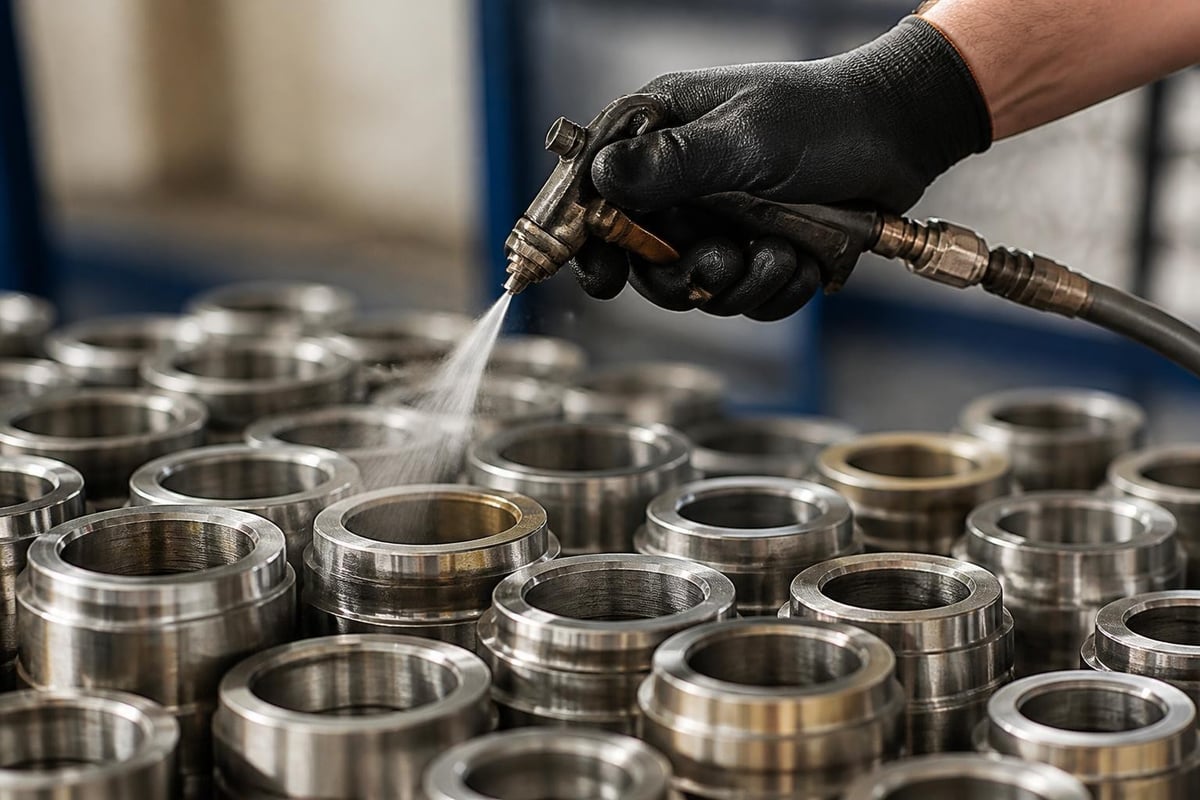
Aluminum, zinc, and magnesium die casting operations depend entirely on specialized release agents that prevent molten metal adhesion while withstanding extreme thermal cycling. This niche represents a technically demanding segment where industrial lubricant co expertise proves essential.
Thermal Stability Requirements
Die casting release agents must remain stable at temperatures exceeding 600°C while creating uniform separating films. The formulation must balance several critical factors: release efficiency, die buildup minimization, casting surface quality, and die life extension. Too much buildup creates defects; too little causes sticking and production delays.
Water-based and solvent-based systems each offer distinct advantages. Water-based release agents provide superior cooling and reduced emissions, while solvent-based formulations offer better wetting on complex die geometries. An industrial lubricant co typically maintains both product lines to serve different customer preferences and regulatory environments.
Application Method Considerations
Application System | Dilution Ratio | Primary Benefits | Typical Use Cases |
Manual spray | 1:20 to 1:40 | Flexibility, low capital cost | Small batch production |
Automated spray | 1:30 to 1:60 | Consistency, reduced labor | High-volume operations |
Electrostatic | 1:40 to 1:80 | Minimal waste, uniform coverage | Premium surface finish requirements |
The industrial lubricant co must provide detailed technical documentation for each release agent formulation, including recommended spray patterns, die temperature parameters, and dilution guidelines that ensure consistent performance across varying production conditions.
Quality Control and Testing Protocols
Rigorous testing distinguishes professional industrial lubricant co operations from commodity suppliers. Every product batch undergoes multiple analytical procedures before release to customers, ensuring consistency and performance reliability.
Physical Property Testing
Viscosity measurement at multiple temperatures establishes flow characteristics critical for proper application. Density, flash point, and pour point testing verify formulation accuracy and safety parameters. For MetalWorking Fluids, emulsion stability testing under varying water hardness conditions ensures field performance matches laboratory results.
Advanced testing methodologies address specific performance attributes. Four-ball wear testing quantifies extreme pressure and anti-wear properties. Salt spray testing evaluates rust prevention duration. Chip settling rates measure how effectively metalworking fluids separate tramp oils and metal fines.
Refractometer readings for concentration monitoring
pH stability across dilution ranges and aging periods
Foaming tendency under dynamic conditions
Microbial resistance to bacterial and fungal contamination
The industrial lubricant co invests significantly in analytical equipment and trained technicians to maintain these quality standards. Third-party certification through independent laboratories provides additional validation that sophisticated buyers increasingly demand.
Sustainable Formulation Trends
Environmental responsibility shapes industrial lubricant co product development strategies throughout 2026. Regulatory pressure, customer sustainability goals, and corporate environmental commitments drive innovation toward bio-based feedstocks and readily biodegradable chemistries.
Bio-Based Lubricant Development
Research into enzymatic catalysis for biolubricant synthesis opens new pathways for sustainable industrial fluid production. While fully bio-based formulations face performance challenges in demanding metalworking applications, partial substitution of petroleum-derived base oils with renewable alternatives gains traction.
The industrial lubricant co must balance sustainability objectives against practical performance requirements. A fully biodegradable grinding fluid offers limited value if tool life decreases or surface finish deteriorates. Successful sustainable products maintain or improve operational performance while reducing environmental impact.
Extended fluid life represents another sustainability lever. Formulations with superior microbial resistance, oxidation stability, and contamination tolerance reduce disposal frequency and consumption volume. An industrial lubricant co achieves environmental gains through chemistry that extends sump life from weeks to months.
Regulatory Compliance Drivers
Modern industrial lubricant co operations navigate increasingly complex regulatory frameworks. REACH regulations in Europe, EPA requirements in North America, and emerging Asian standards demand comprehensive ingredient disclosure and hazard assessment. Products containing legacy chemistries like chlorinated paraffins or formaldehyde-releasing biocides face phase-out pressure.
The metalworking fluids portfolio must evolve continuously as regulations tighten. Forward-thinking industrial lubricant co operations invest in reformulation programs before regulatory deadlines, maintaining customer relationships through proactive chemistry transitions rather than reactive crisis management.
Technical Support and Application Engineering
Product formulation represents only part of industrial lubricant co value creation. Technical support services differentiate premium suppliers from basic chemical distributors, particularly when addressing complex application challenges.
On-Site Troubleshooting
Application engineers visit customer facilities to diagnose performance issues, recommend process improvements, and optimize fluid selection. Common interventions include adjusting concentration levels, modifying filtration systems, improving tramp oil removal, and addressing biological contamination through enhanced sump hygiene protocols.
The industrial lubricant co technical team must understand customer processes deeply. Machining parameters, material specifications, equipment capabilities, and production schedules all influence optimal fluid selection and management. Cookie-cutter recommendations fail; customized solutions based on thorough analysis succeed.
Training programs for customer maintenance and production personnel extend product performance. Even superior formulations underperform when improperly managed. An industrial lubricant co committed to long-term customer success invests in education covering concentration monitoring, contamination control, and preventive maintenance best practices.
Specialized Applications and Niche Markets
Beyond mainstream metalworking and rust prevention, specialized segments require unique formulation approaches. The industrial lubricant co serving these markets develops deep technical expertise in narrow application domains.
Cleanroom and Vacuum Applications
Research on lubricant formulations for cleanroom and vacuum environments highlights the specialized challenges these applications present. Perfluoropolyether (PFPE) and multiply-alkylated cyclopentane (MAC) base oils offer the low outgassing and chemical inertness that semiconductor manufacturing and scientific instrumentation require.
These specialty products command premium pricing but represent relatively small volumes. An industrial lubricant co must carefully evaluate whether niche market opportunities justify the R&D investment and inventory complexity they introduce.
Extreme Temperature Applications
High-temperature manufacturing processes-hot forming, die forging, glass molding-require lubricants stable beyond 300°C. Graphite dispersions, synthetic esters, and specialized solid lubricant technologies address these extreme conditions. The industrial lubricant co serving these markets maintains specialized testing capabilities and formulation expertise that mainstream suppliers lack.
Supply Chain Management and Raw Material Sourcing
Behind every finished product stands a complex supply chain that the industrial lubricant co must carefully manage. Base oil procurement, additive sourcing, packaging materials, and logistics coordination all impact product quality, availability, and cost competitiveness.
Base Oil Selection Strategy
| Base Oil Type | API Group | Characteristics | Typical Applications |
Mineral Oil | I-II | Cost-effective, widely available | Standard metalworking fluids |
Hydrocracked | II-III | Improved stability, consistency | Premium rust preventives |
Synthetic PAO | IV | Superior performance, temperature range | High-performance metalworking |
Esters | V | Biodegradability, lubricity | Environmentally sensitive applications |
Base oil prices fluctuate with crude oil markets, requiring the industrial lubricant co to manage inventory strategically and sometimes reformulate products around available feedstocks. Long-term supplier relationships and dual-sourcing strategies mitigate supply disruption risks.
Specialty additives often come from single-source suppliers with long lead times. The industrial lubricant co maintains safety stock for critical components while balancing inventory carrying costs against stockout risks that could halt production.
Customer Relationship Management
The industrial lubricant co business model depends on long-term customer relationships built through consistent product performance and responsive technical support. Account management strategies differ substantially from consumer-focused marketing approaches.
Value-Based Selling
Industrial buyers evaluate total cost of ownership rather than simply price per liter. Demonstrating how a premium metalworking fluid extends tool life by 25%, reduces cycle times by 10%, or improves surface finish quality creates quantifiable value that justifies higher pricing. The industrial lubricant co sales team must articulate these economic benefits through case studies and performance data.
Customization capabilities strengthen customer retention. While standardized products serve most applications efficiently, certain customers face unique challenges requiring tailored formulations. The industrial lubricant co willing to develop custom blends for significant accounts builds switching barriers through product uniqueness.
Documentation and certification support prove essential for customers in regulated industries. Complete technical data sheets, safety data sheets, regulatory compliance letters, and quality certificates represent table stakes for serious industrial lubricant co operations serving automotive, aerospace, and medical device manufacturers.
Future Outlook and Industry Evolution
The industrial lubricant co landscape continues evolving through consolidation, globalization, and technological advancement. Understanding these trends helps manufacturers select supplier partners positioned for long-term success.
Digitalization and Predictive Maintenance
Sensor technologies increasingly monitor fluid condition in real-time, detecting contamination, depletion, and degradation automatically. The industrial lubricant co embracing these digital tools offers customers predictive maintenance capabilities that prevent unplanned downtime and optimize fluid replacement timing. Integration with Industry 4.0 manufacturing systems represents the next competitive frontier.
Formulation software incorporating artificial intelligence accelerates new product development. Rather than traditional trial-and-error testing, computational models predict performance characteristics from molecular structure. The industrial lubricant co investing in these technologies compresses development cycles and reduces R&D costs.
Distribution Network Optimization
Geographic expansion challenges the industrial lubricant co through logistics complexity and working capital requirements. Balancing central production efficiency against local market responsiveness requires strategic network design.
Regional Blending Operations
Some industrial lubricant co operations establish regional blending facilities that combine centrally-produced additive packages with locally-sourced base oils. This hybrid model reduces freight costs on bulky finished products while maintaining formulation consistency through standardized additive concentrates.
Distributor partnerships extend market reach without capital-intensive infrastructure investment. The industrial lubricant co provides technical training, marketing support, and inventory financing to distributor networks that handle last-mile delivery and local customer relationships. Selecting distributors with complementary capabilities and aligned quality standards proves critical for brand protection.
The industrial lubricant co sector serves as an essential enabler of global manufacturing, providing specialized fluid solutions that optimize machining operations, protect valuable equipment, and ensure product quality across countless industries. Success in this technically demanding field requires deep formulation expertise, rigorous quality control, responsive customer support, and continuous innovation to address evolving performance requirements and sustainability expectations. Whether you need customized metalworking fluids, advanced rust preventive solutions, or specialized die casting release agents, partnering with an experienced industrial lubricant co makes the difference between acceptable and exceptional manufacturing outcomes. Guangzhou Rolitom Lubricant Technology CO.,LTD brings over 20 years of formulation expertise, comprehensive product portfolios, and dedicated technical support to help your operation achieve maximum efficiency and reliability.
Contact: LilyLu
Phone: +86 138 2603 0637
E-mail: lilylu@rolitom.com
Whatsapp:+8613826030637
Add: Room 426, No.1218 Zhongshan Avenue Middle, Tianhe District, Guangzhou City,China
We chat